



Please call us or fill in the form below and we will be delighted to help with your enquiry.
 0207 386 0464
Mole Removal – Safe, Expert Care
At Cosmedics Skin Clinics, our expert team provides surgical and laser mole removal for both cosmetic and medical reasons. Using advanced techniques, we ensure minimal scarring and excellent cosmetic results, while prioritising patient safety and comfort. Same-day treatment is available at our London and Bristol clinics, making it easy to get professional care when you need it.
Mole Removal Reviews
Treatment Benefits

Time

Recovery

Results

Duration
Mole Removal Costs
| Moles | Surgery | Histology* | Total Cost |
|---|---|---|---|
| Shave Excision +/- Laser | |||
| 1 | from £345 | £95 | £440 |
| 2 | from £525 | £115 | £640 |
| 3 | from £705 | £135 | £840 |
| 4 | from £885 | £155 | £1,040 |
| 5 | from £1,065 | £175 | £1,240 |
| Ellipse Excision | |||
| 1 | from £595 | £95 | £690 |
Mole Consultation
Consultations with our doctors or surgeons cost £75 for mole removal. The consultation fee is redeemable against the price of mole removal treatment when carried out at the same appointment as the consultation.
Doctor consultations are purely for the moles’ patients request to have assessed for removal. Please book separately for a full body mole check.
Prices may vary for more complicated lesions. All prices subject to confirmation at the doctor consultation.
Histology / Testing of the Mole
* All moles that are removed are sent to a separate laboratory for histology microscopic testing by a pathologist doctor to ensure the correct diagnosis. This is a standard requirement for good medical practice and results will be sent to you via encrypted email.
Please call 0207 386 0464 OR email [email protected] for help.



Mole Removal Treatment Information
Looking to have a mole removed?
At Cosmedics we offer same day treatments for cosmetic moles and potential worrying moles at our 5 mole clinics conveniently located in London and Bristol.
Moles on the face and body
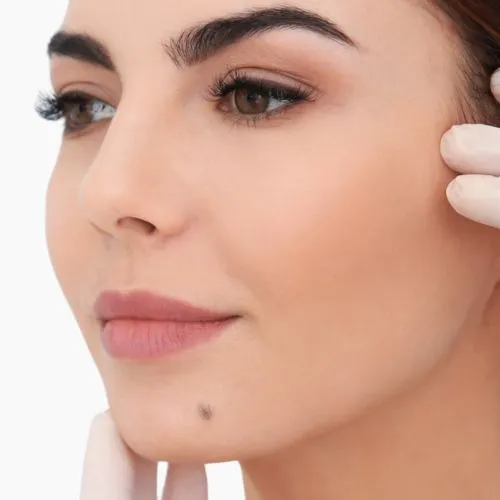
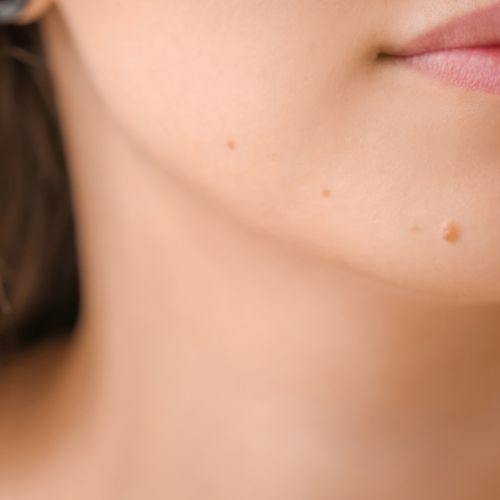
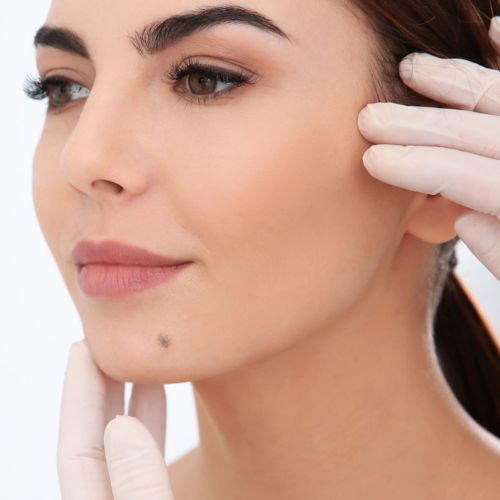
It is quite normal for people to have facial moles as well as on the body. They can vary in colour, size shape whether they are flat or protrude from the skin.
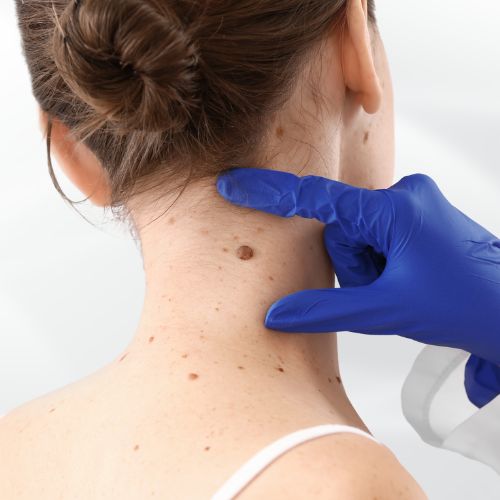
Most moles are harmless and we tend to get more as we age. Abnormal moles tend to have different shape, size and a darker colour to your other moles as well as grow more rapidly.
Mole removal costs from £345
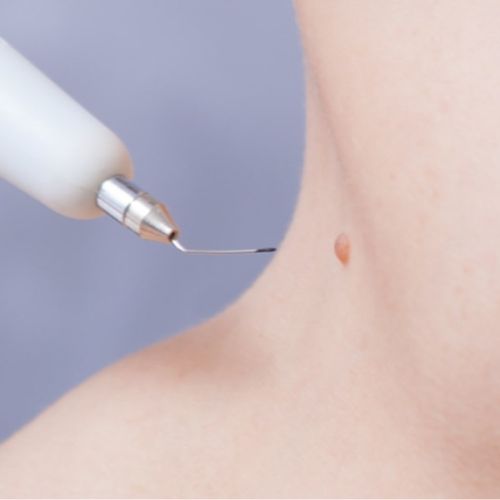
Mole removal at our London and Bristol clinics is a quick and painless procedure for the removal of cosmetic moles which patients happily undergo to help with their confidence as well as prevent them from being irritating. At Cosmedics our expert doctors are also able to assess potentially worrying moles, precancerous and skin cancer lesions to see if they warrant removal and testing.
We are a leading UK clinic for moles and as such offer laser mole removal as well as mole removal surgery according to each individual scenario. Having both these option means that we make the whole process comfortable and easy but ensure the results are the best they can be with minimal or no scarring.
Most patients come in and have the moles removed at the first appointment and often takes little under 30 minutes. They can then go home immediately and carry-on life as normal.
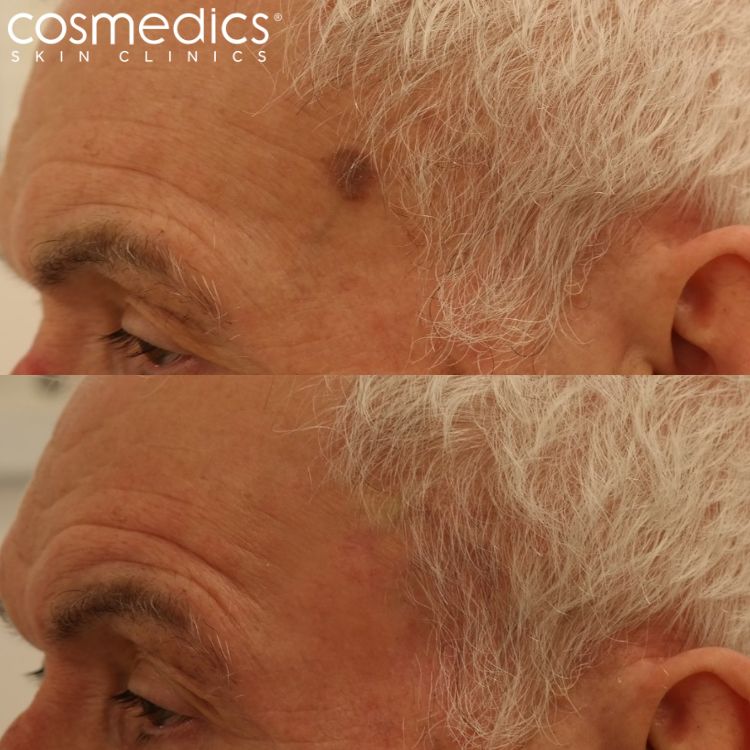
The commonest method of removing moles is by shave excision and laser(1) which requires no stitches and heals like a graze with outstanding results and quick healing.
When is a mole worrying?
We recommend you seek a doctor’s advice for any of your moles if you notice one or more of the following symptoms:
- It has/is changing colour
- It has/is changing shape and size
- It is inflamed, itchy or painful
- It is protruding or causing irritation (for example, it’s catching on clothing)
We recommended you self check yourself every 2-3 months looking for the classic signs of skin cancer which are ABCDE – A – asymmetry B – Border C – colour D – diameter >6mm E – evolving.
What are the Benefits of Mole Removal?
Our doctors and surgeons often will proceed with single or multiple mole removals when
- The mole is protruding and is easily irritated by clothing (for example, catching on bras, belts etc)
- The mole is cosmetically bothering you and you would like it removed
- The mole is worrying and needs to be removed for testing (histology) and treatment to eliminate the risk of cancer
- The mole is considered potentially dangerous and you would rather eliminate the risk now than continue monitoring it and having regular check-ups
Why choose Cosmedics for mole removal
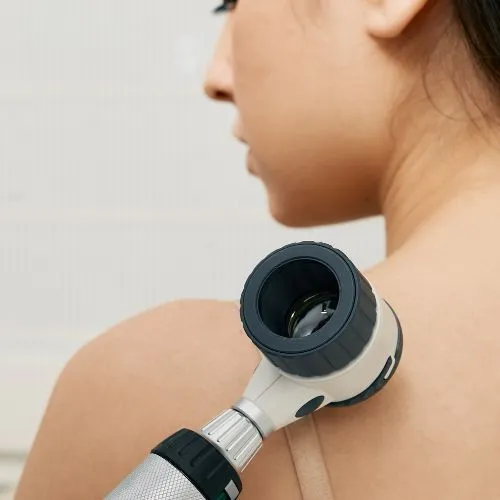
Cosmedics have successfully treated over 20,000 patients for moles and skin lesions. All our doctors and surgeons at Cosmedics are trained in plastic surgery and dermatology as well as the use of lasers. Patients expect the best results and as such we use our training and dermoscopy to ensure an accurate diagnosis that will then dictate the best technique to use. This process ensure any moles or skin lesions removed have the best cosmetic outcomes.
Our London and Bristol mole removal clinics are CQC registered to ensure a high-quality service. The mole removal costs are competitively priced and start from £345.
Same day treatment
We offer treatments on the same day for mole removal, wart removal & skin tag removal as well as cyst removal as part of our unique ‘See & Treat’ Service.
Patients always say to us how quick, easy and painless the whole process was. Most procedures only take 5-10 minutes and you can resume your normal activities straight away. See our patient journey in FAQ.
Mole removal options
- Shave excision(2) & laser surgery – no stitches & takes 5 minutes. Best for raised moles. Most popular
- Ellipse excision surgery – involves stitches & takes 20 minutes. Best for flat or suspicious moles.
- Radiosurgery mole removal for benign protruding moles.
- Laser treatments(3,4) – for small warts, moles, skin tags and red blemishes. Takes a few minutes.
- Cryotherapy / Freezing – for warts, skin tags and minor skin blemishes. Takes a few seconds.
Aftercare advice will be given to you in the consultation and a leaflet to take home along with any appropriate medications and or dressings. We have 24 hour care service so that if you have any issues, you can contact us night or day and we will respond promptly.
Aftercare recommendations
After the procedure, you can resume normal activities in most cases and a dressing is applied to keep the wound clean for a few days.
Any aftercare requirements will also be fully discussed and explained in your consultation. See our FAQ below for what to expect.
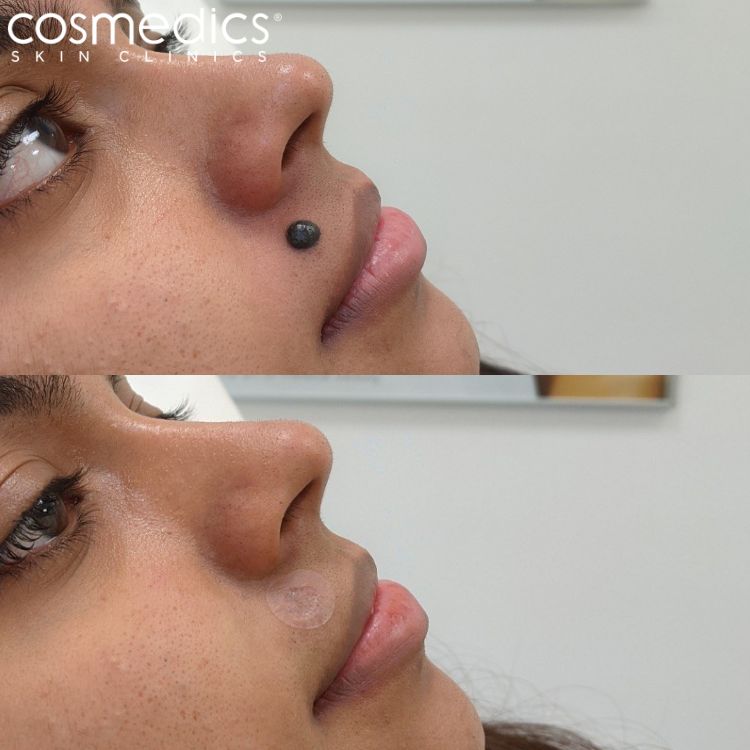
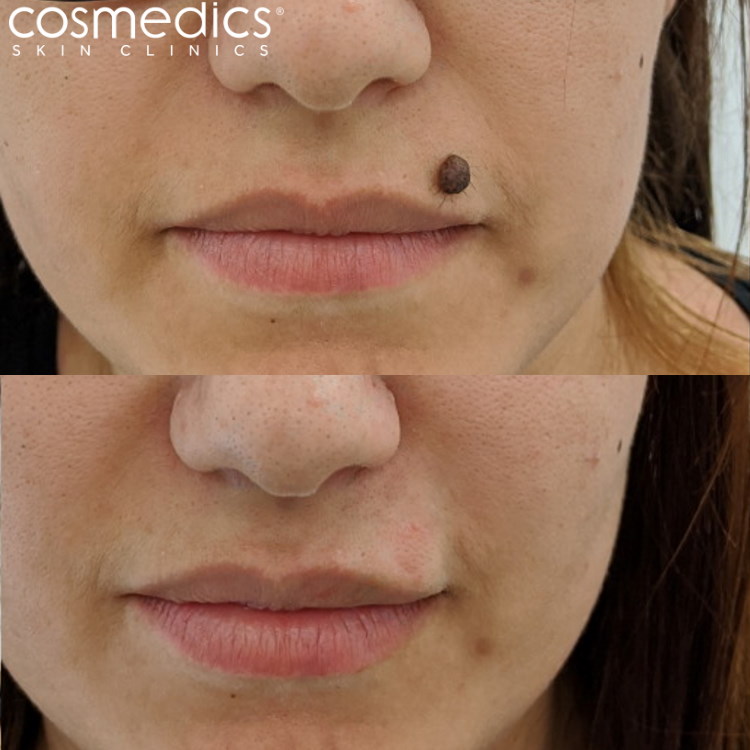
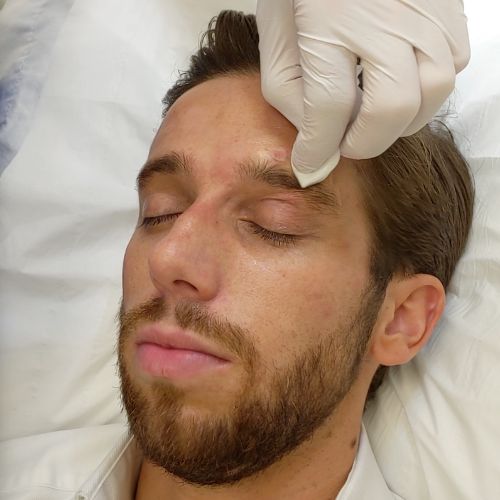
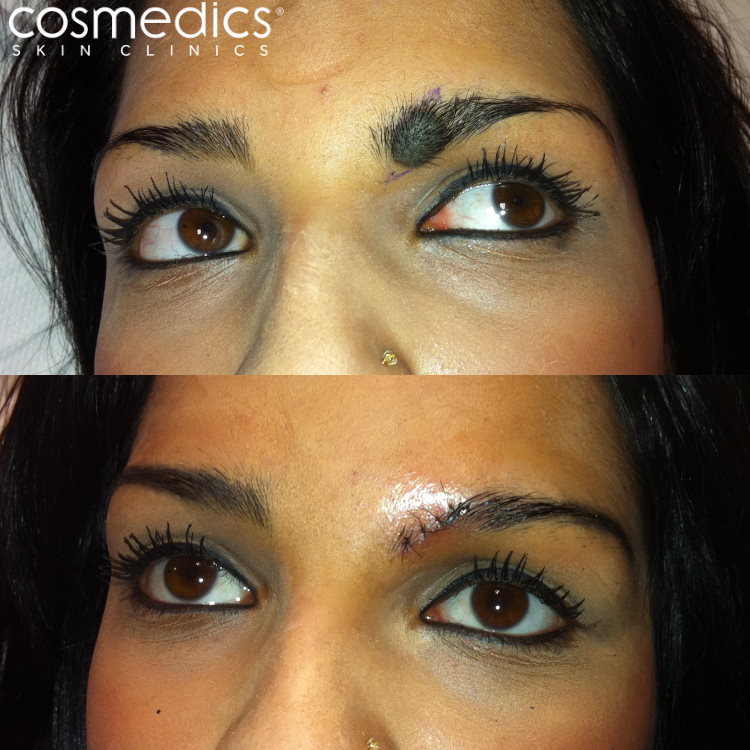
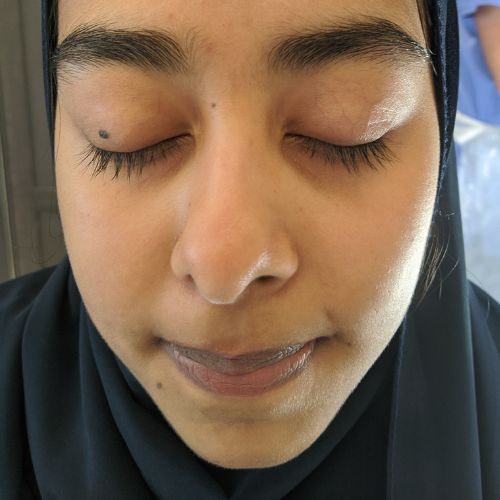
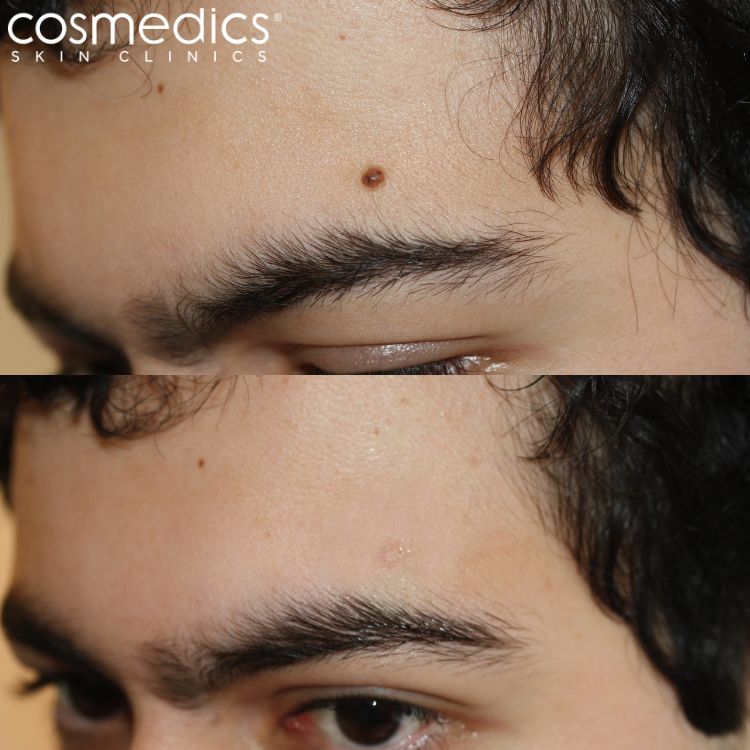
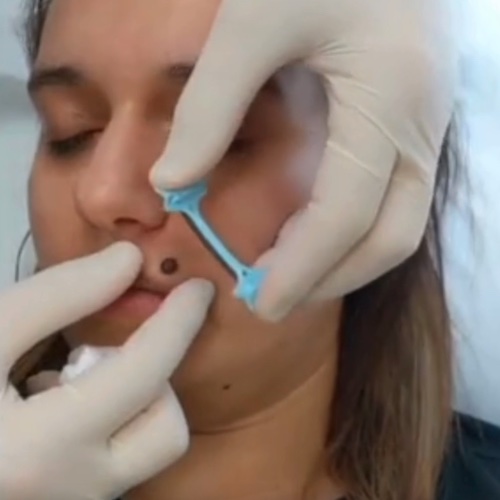
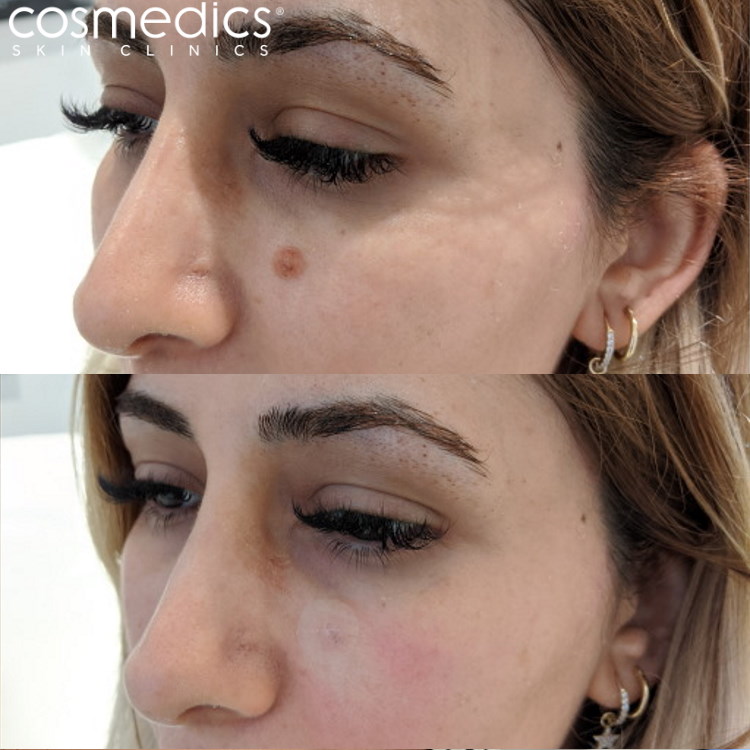
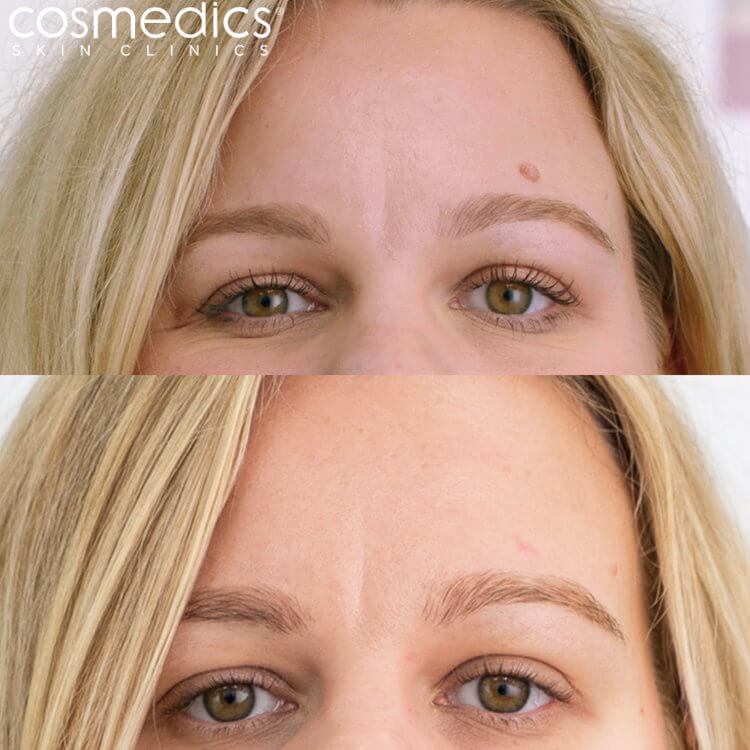
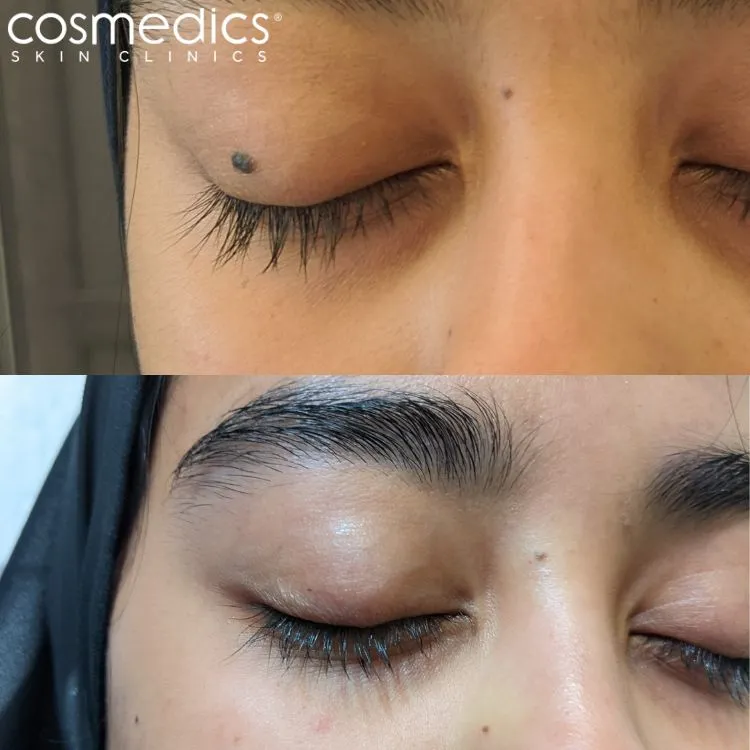
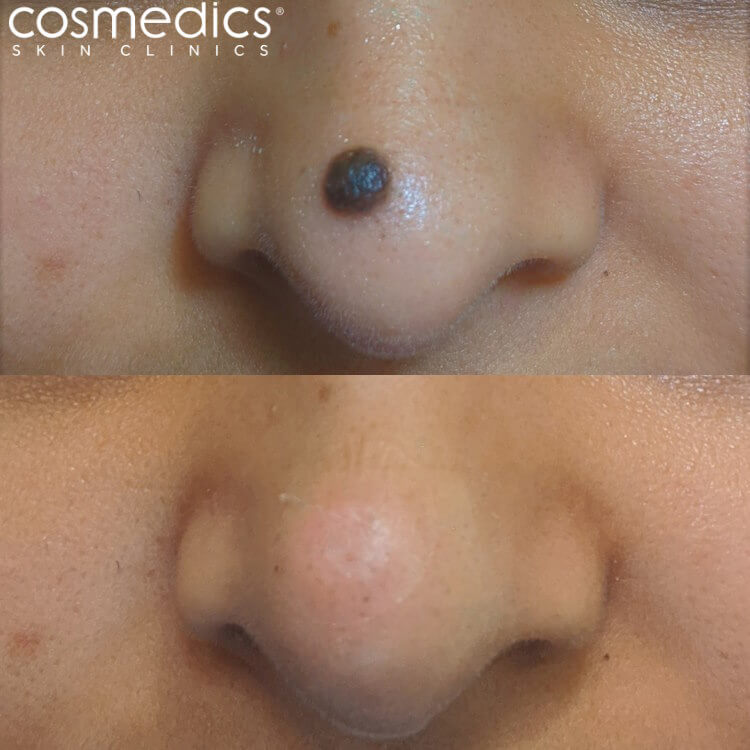
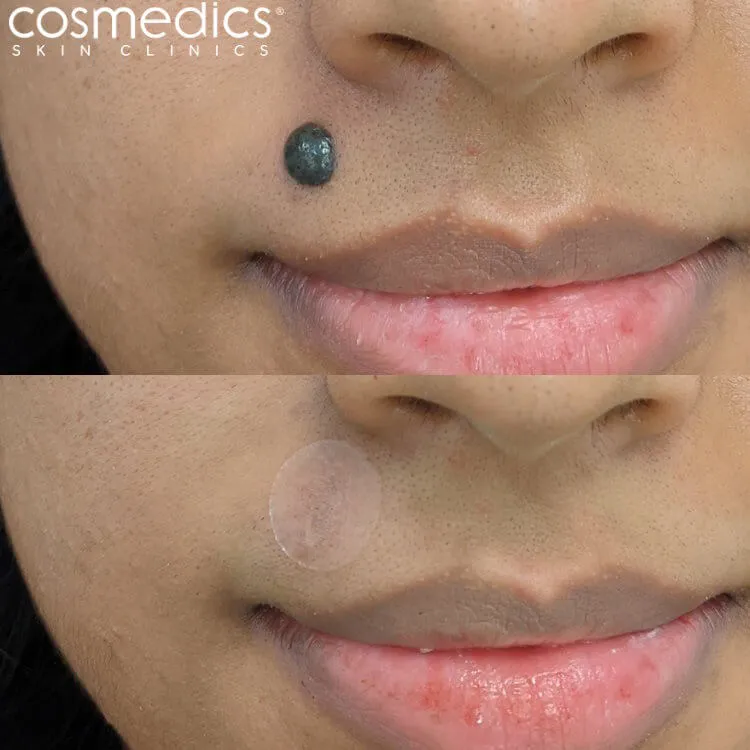
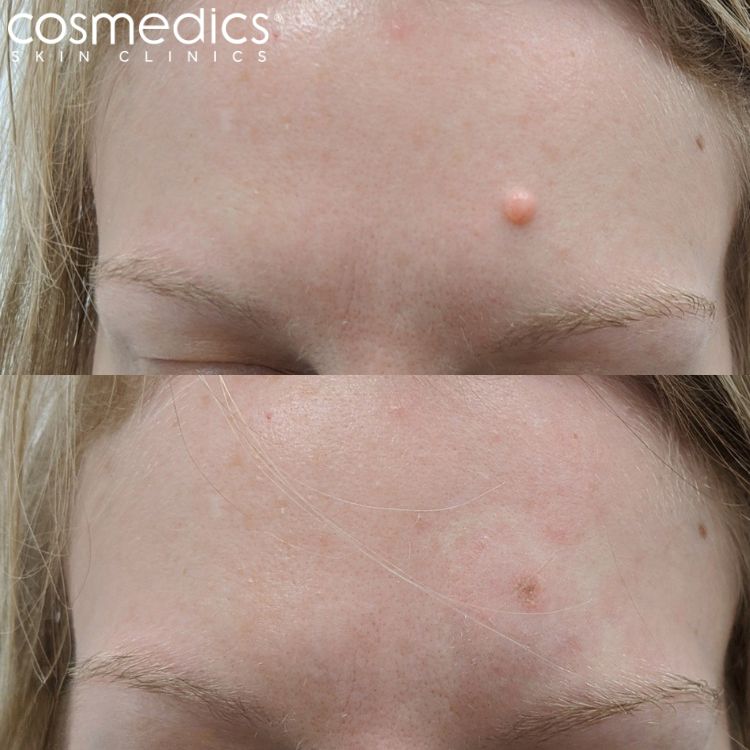
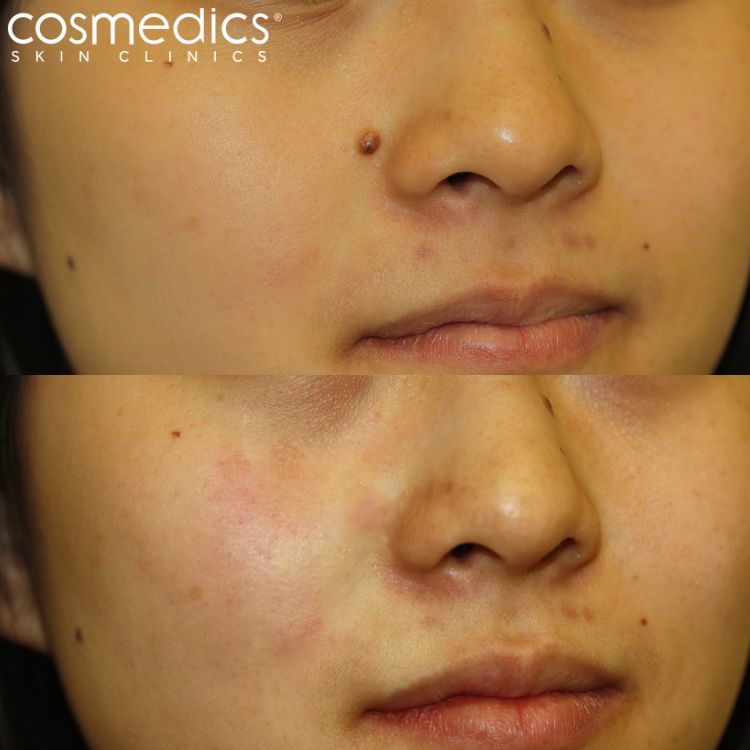
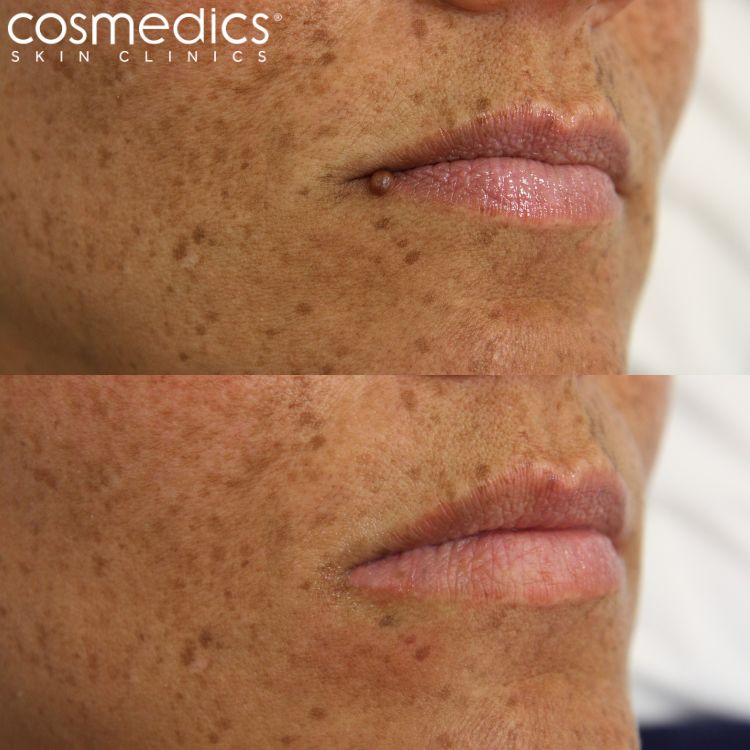
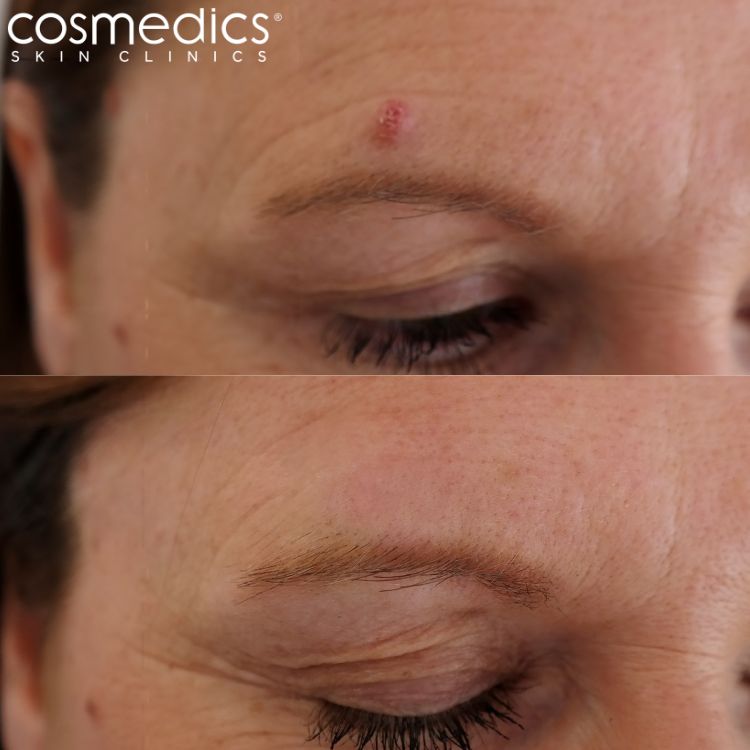
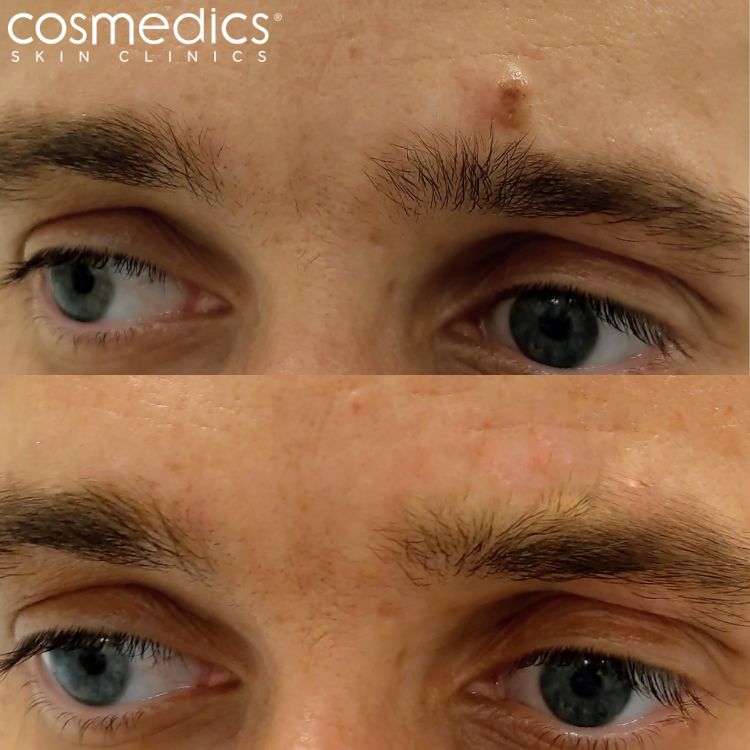
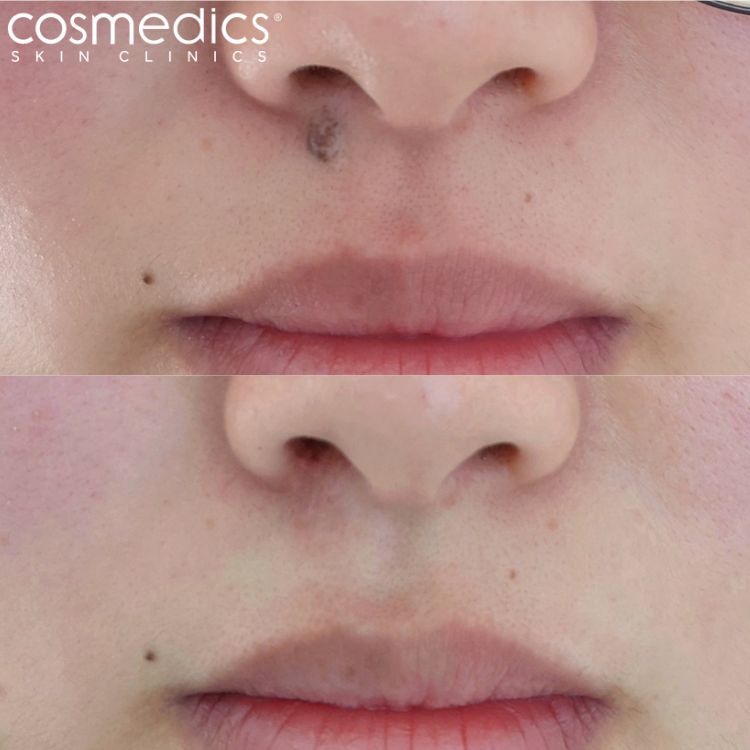
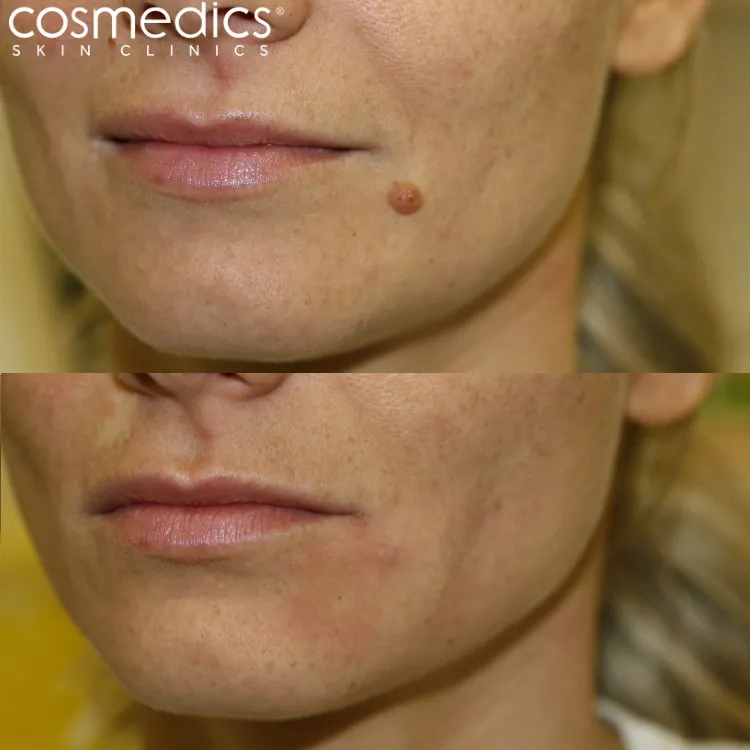
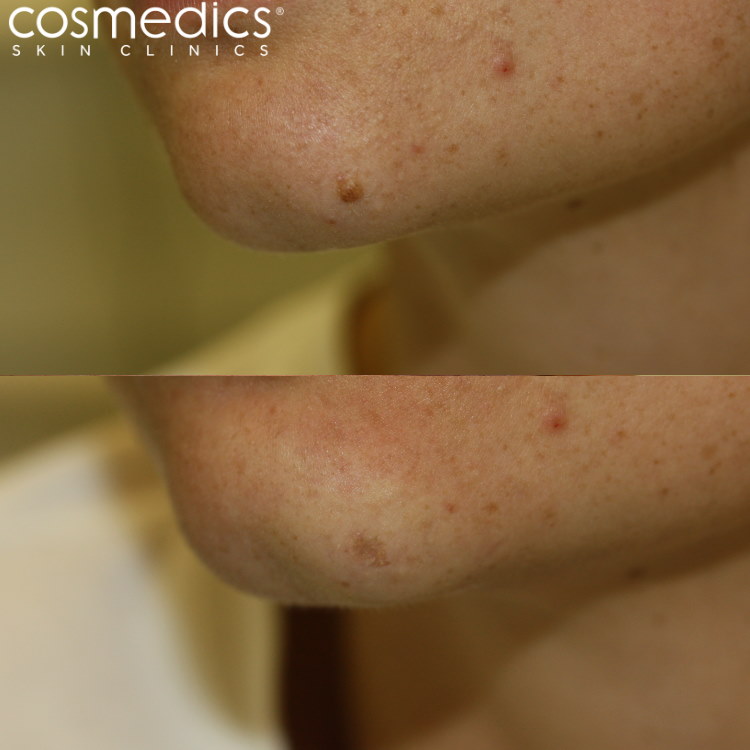
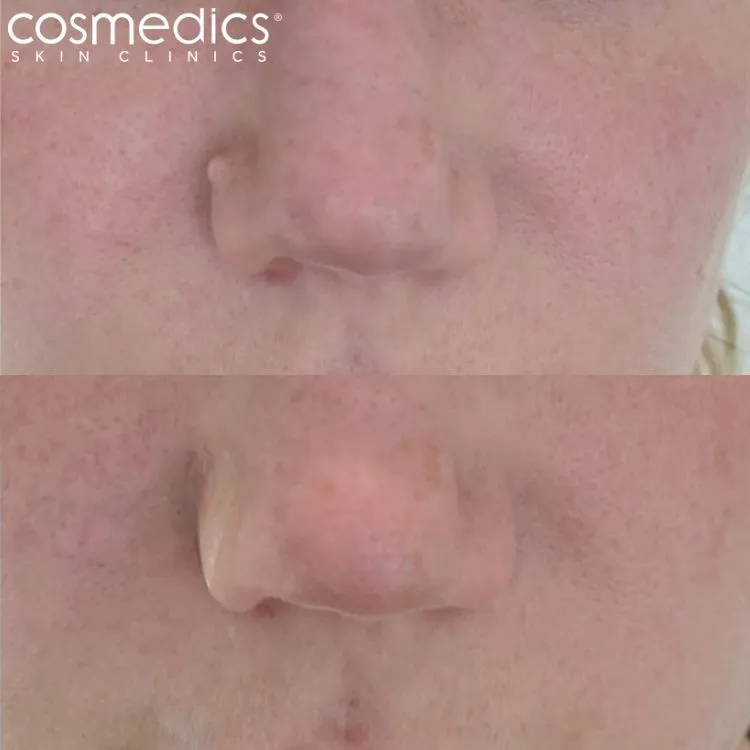
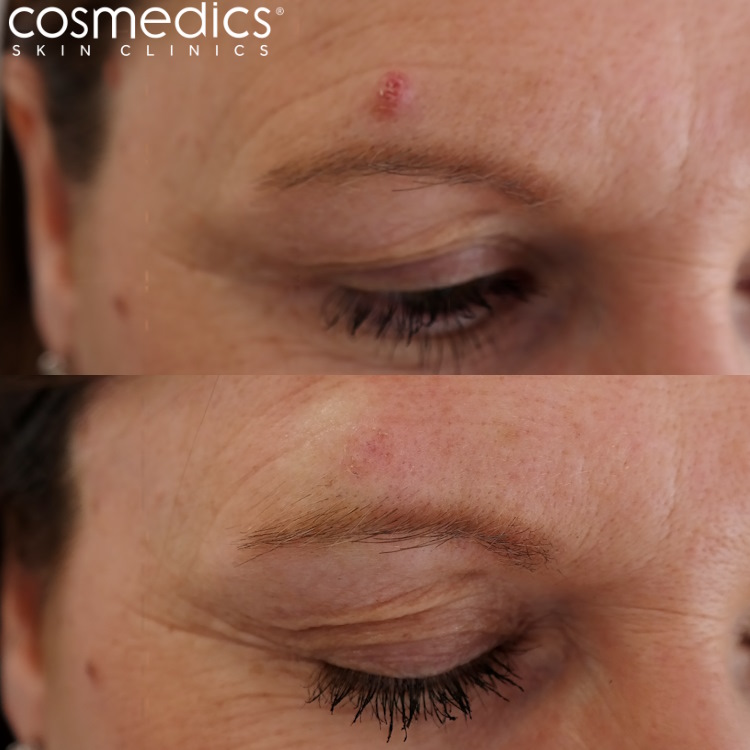
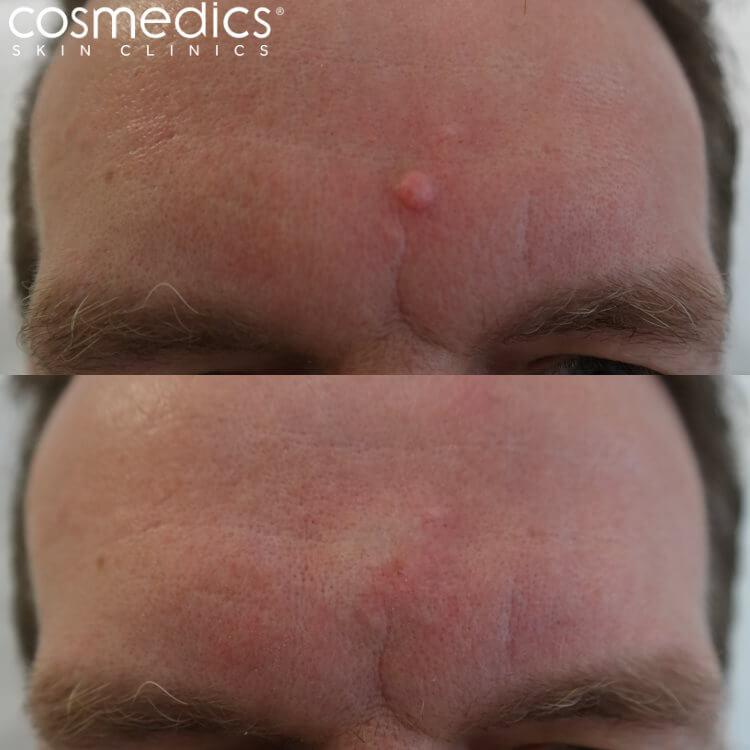
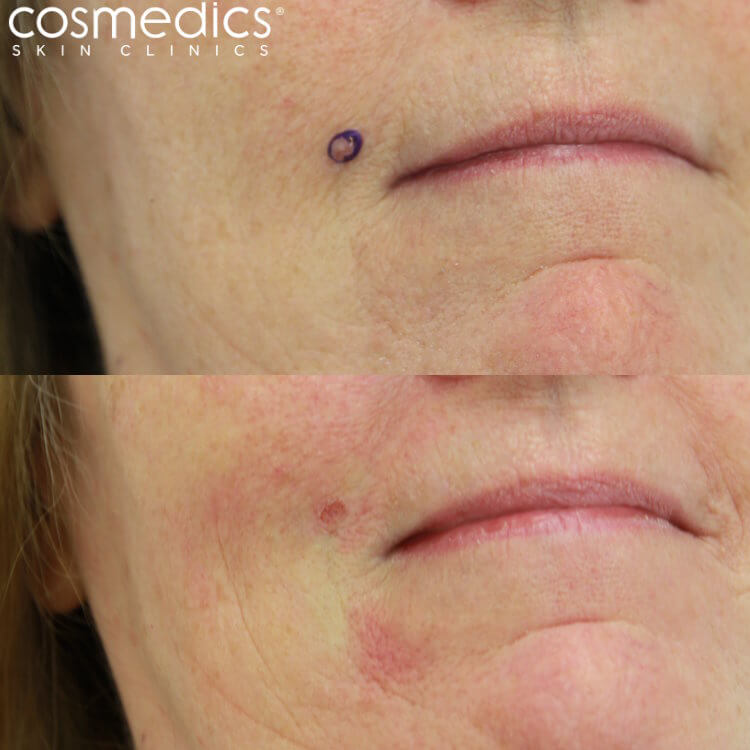
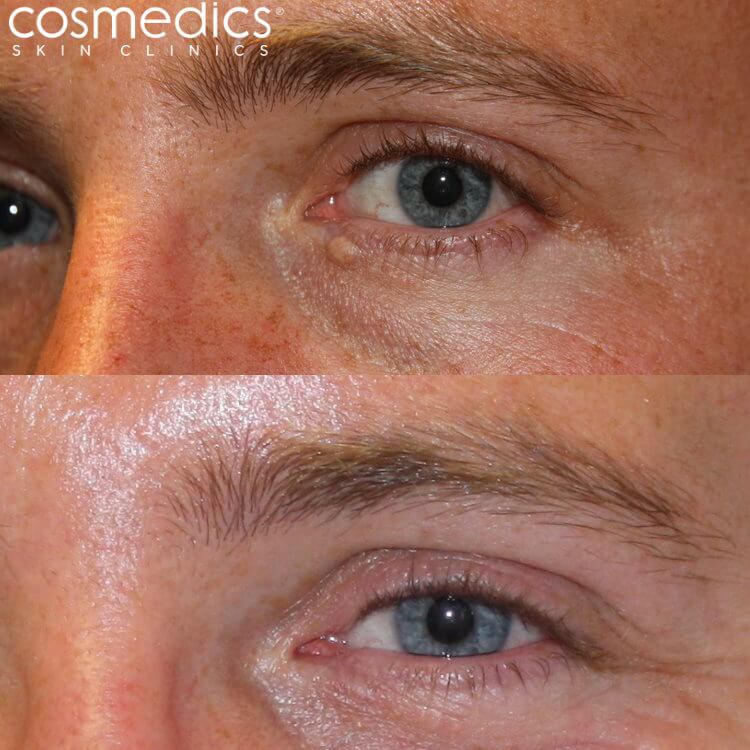
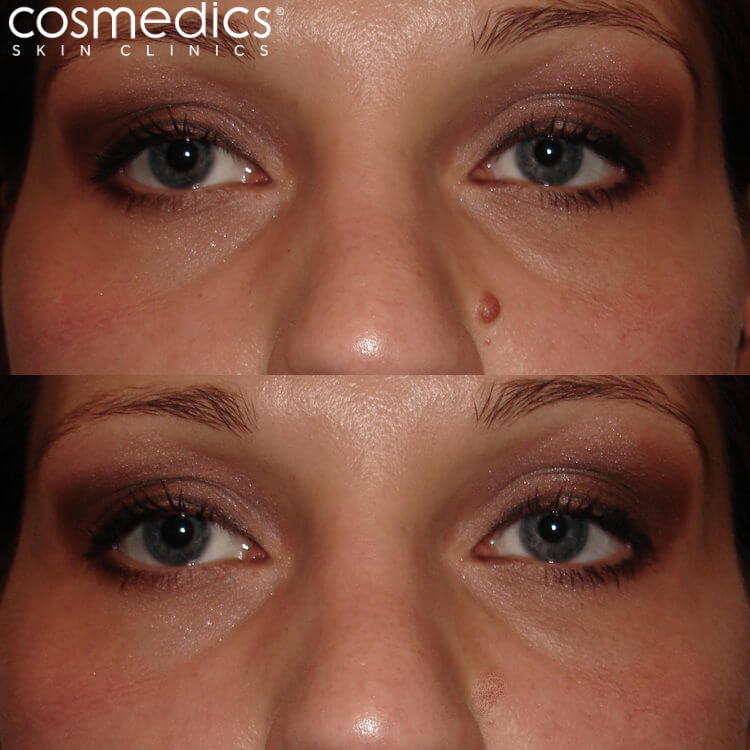
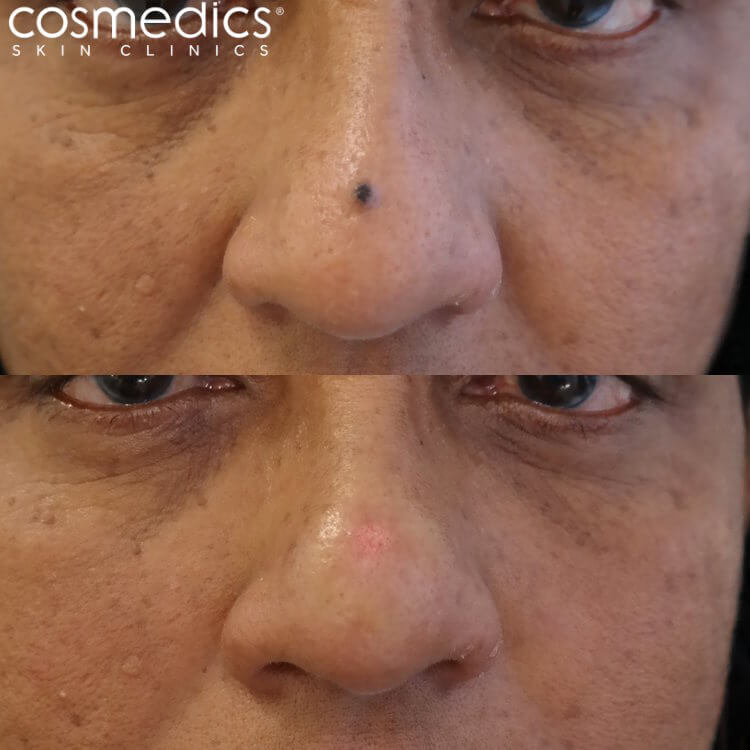
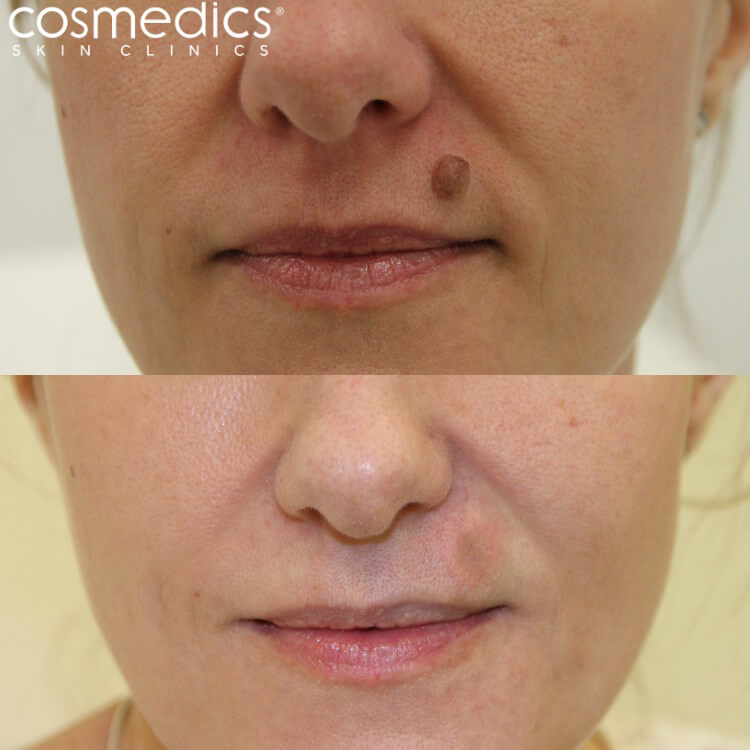
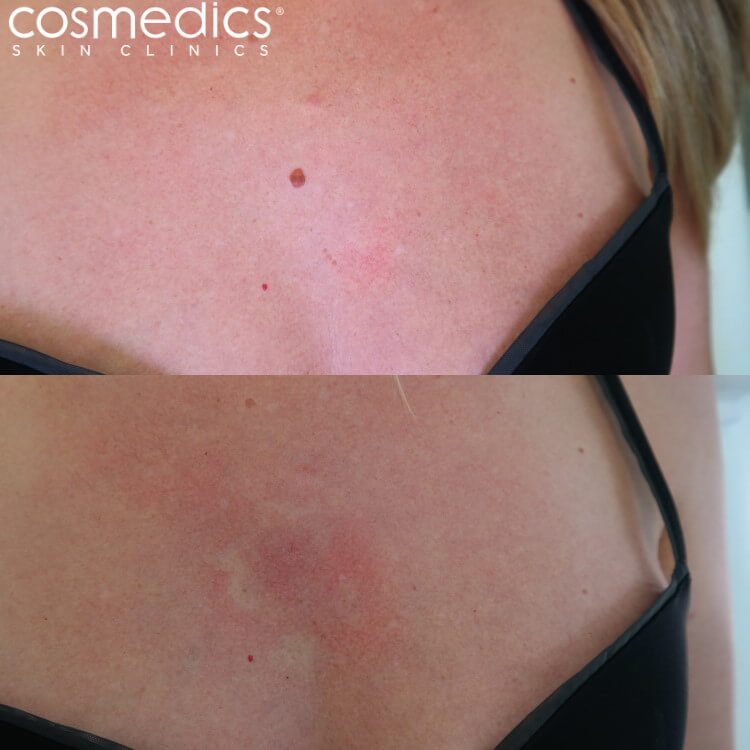
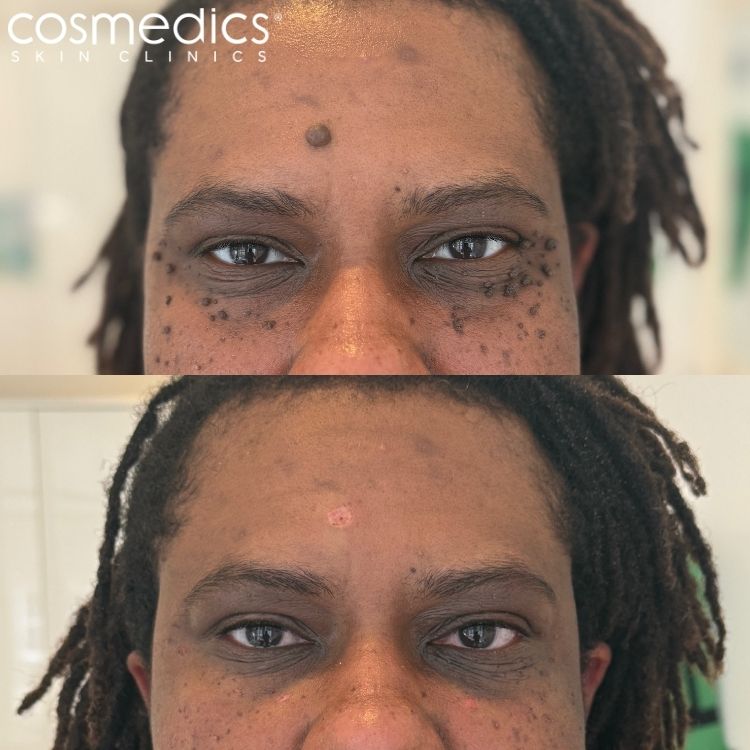
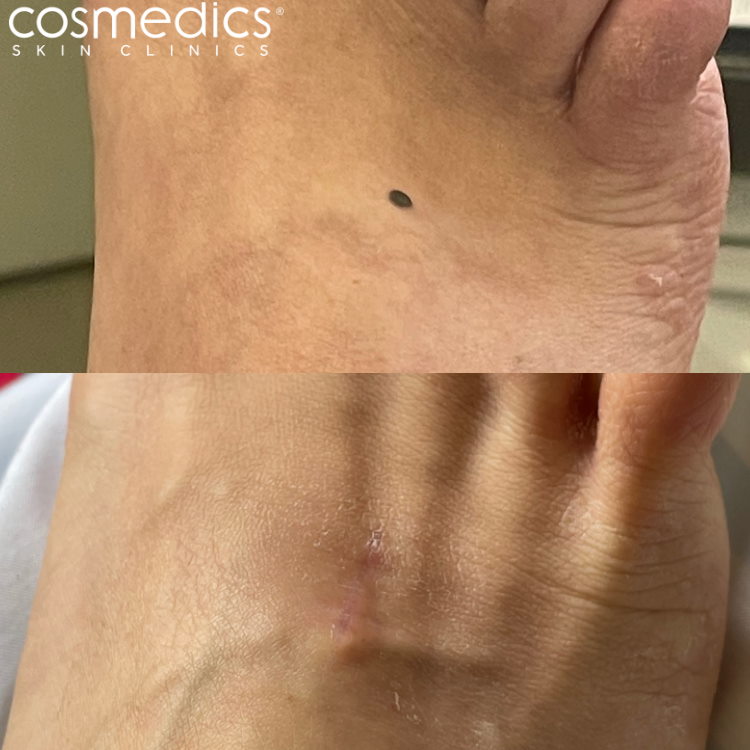
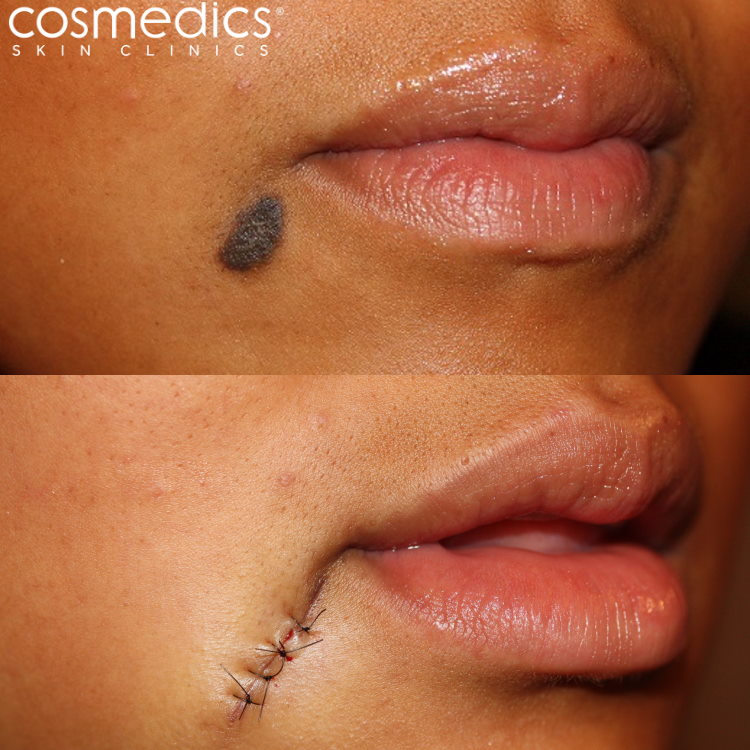
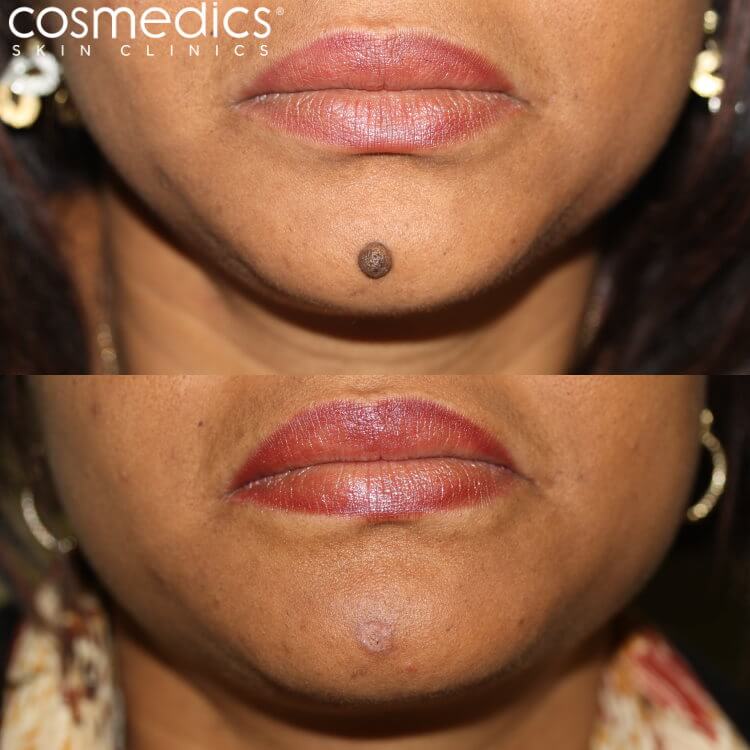
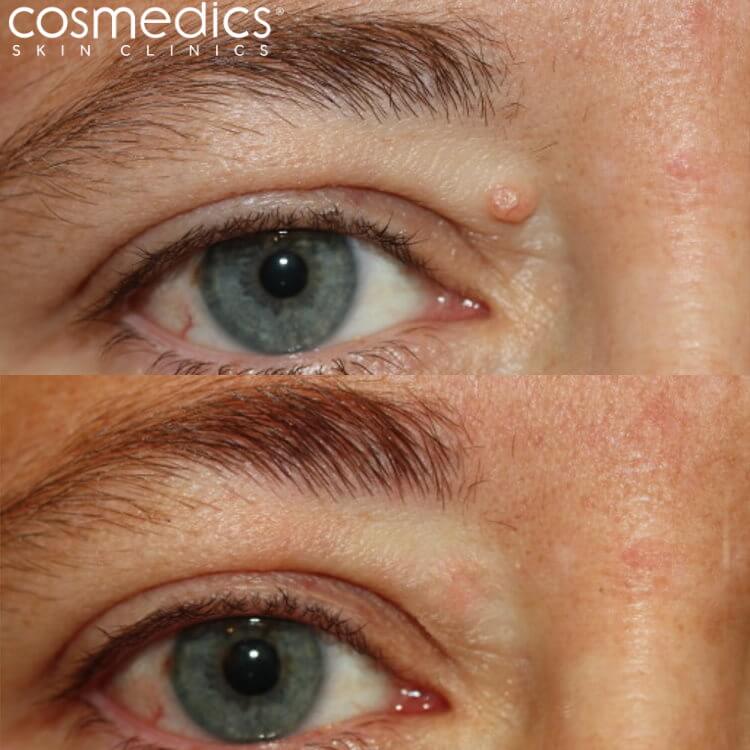
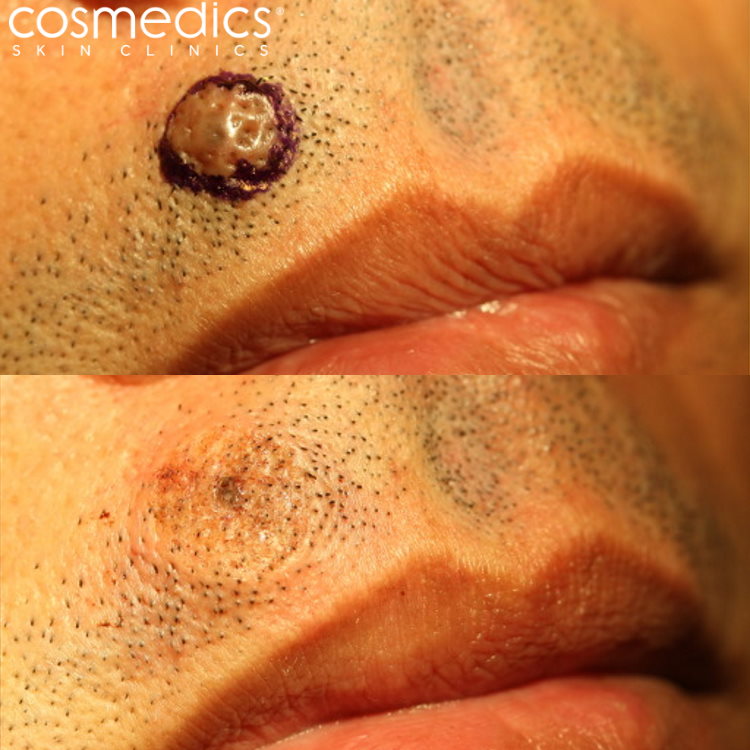
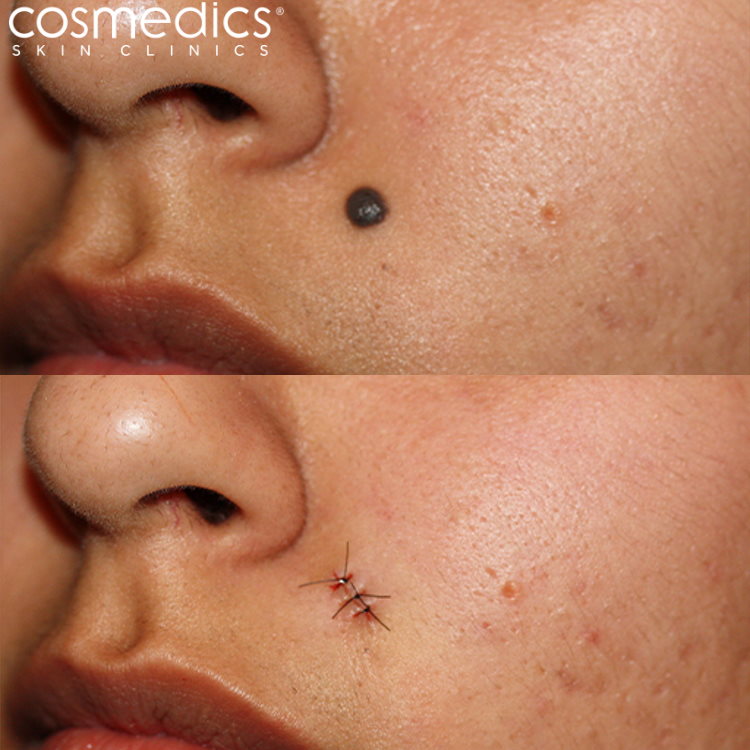
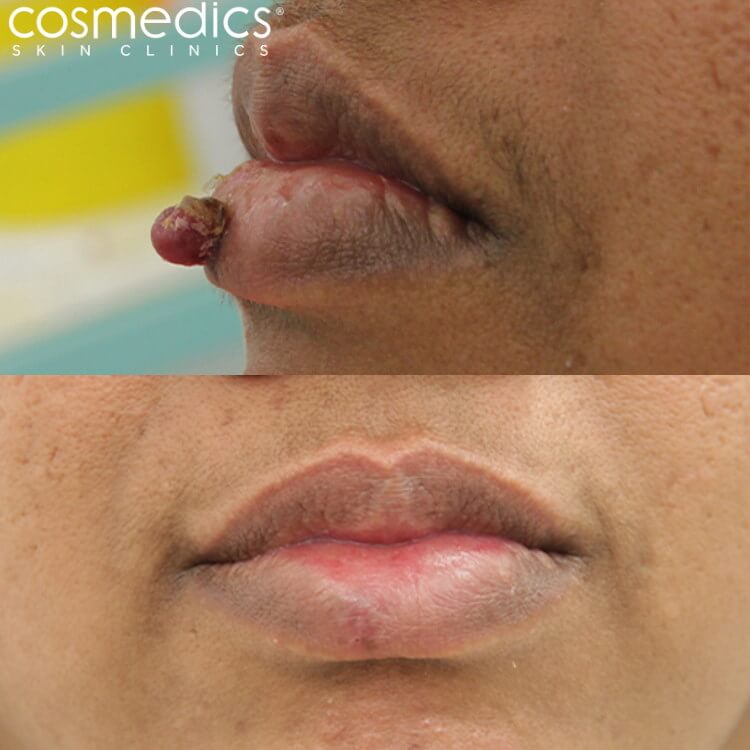
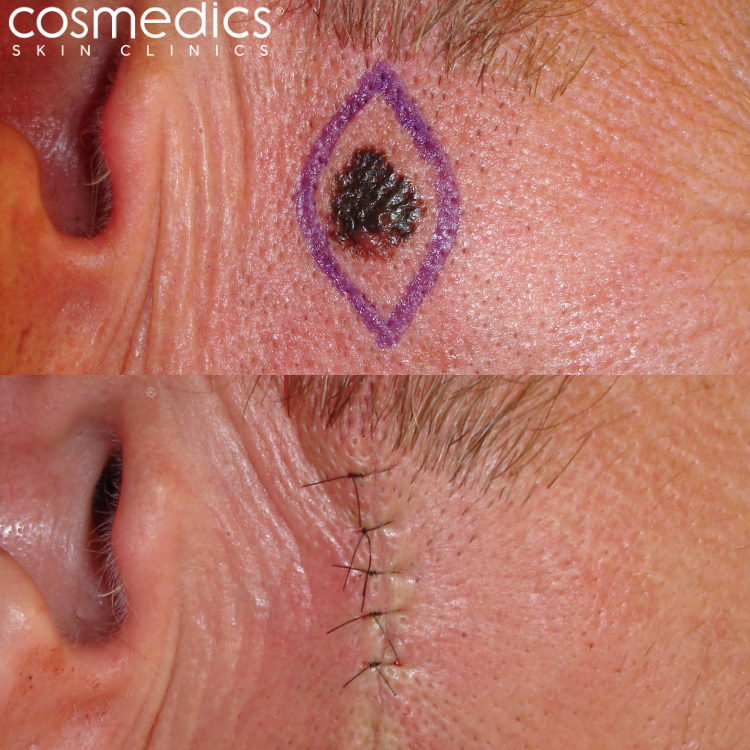
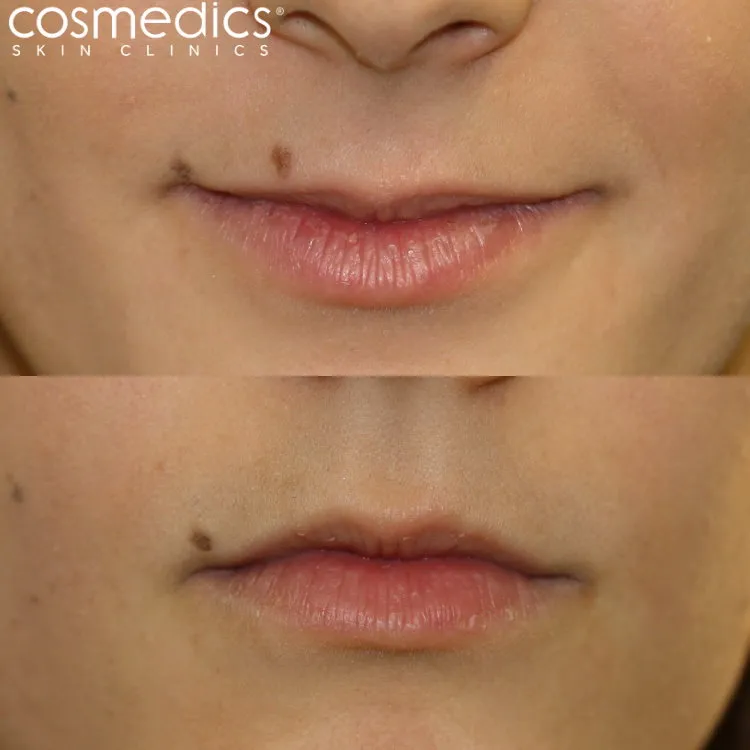
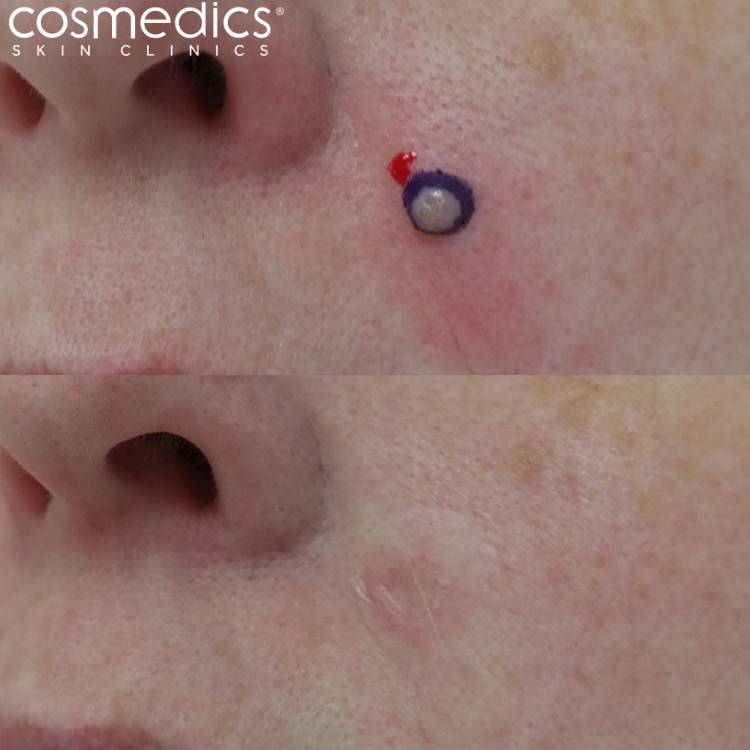
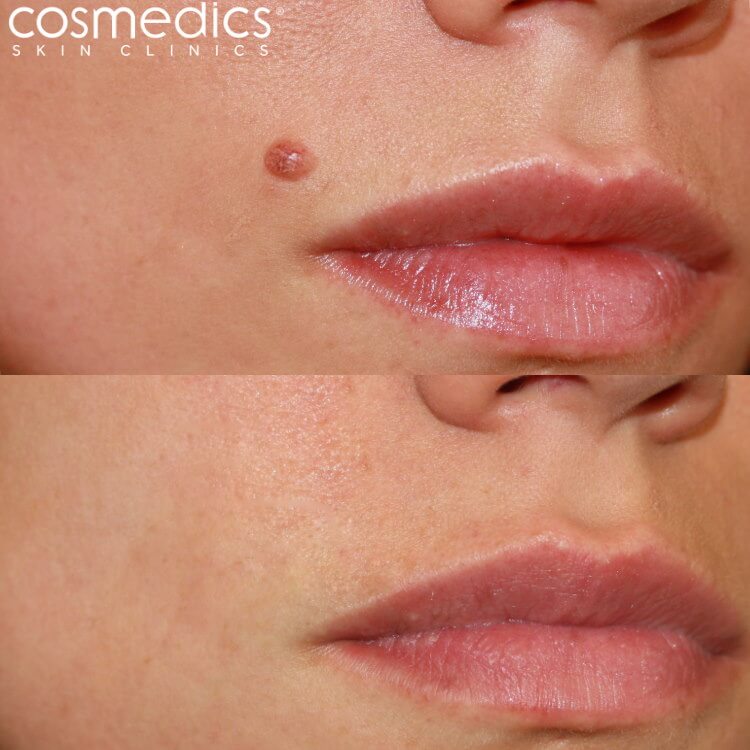
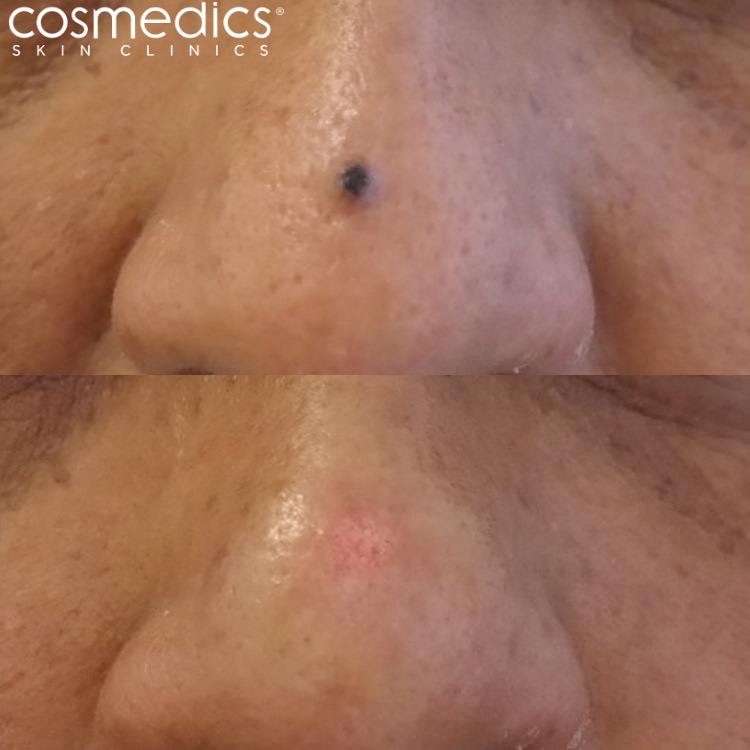
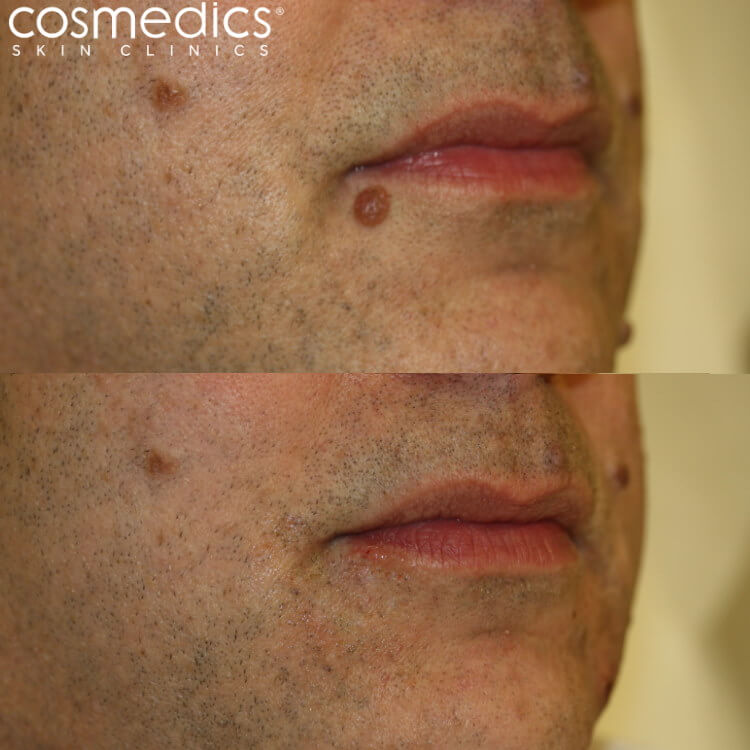
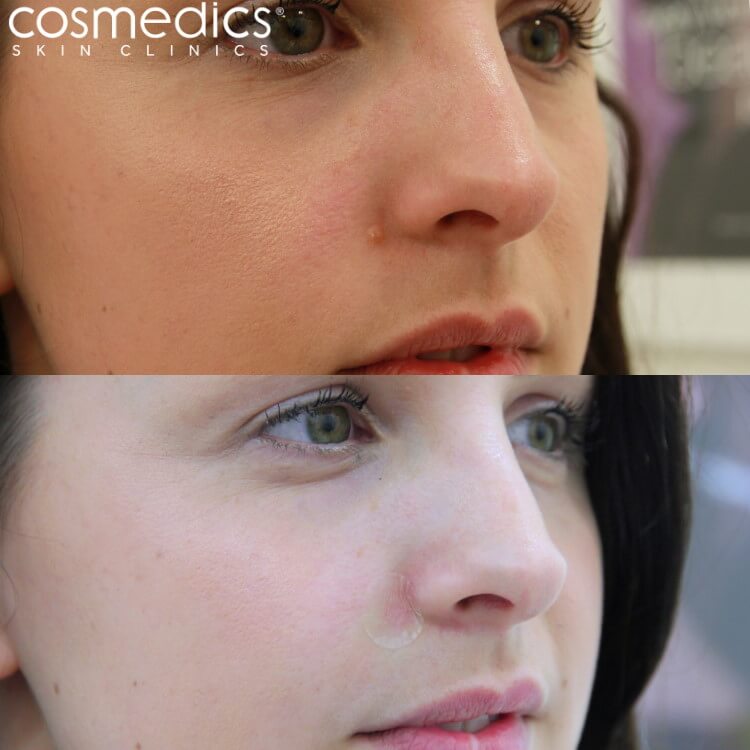
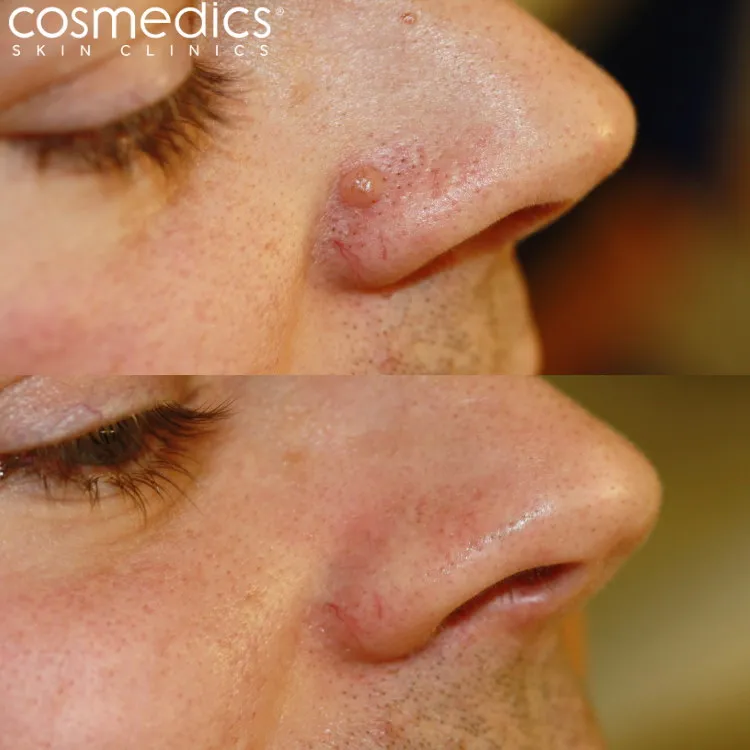
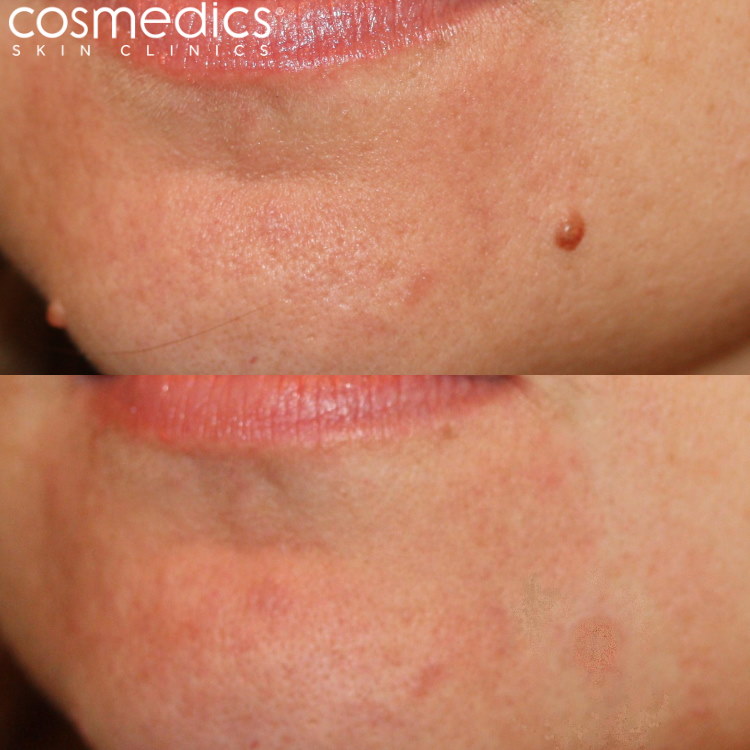
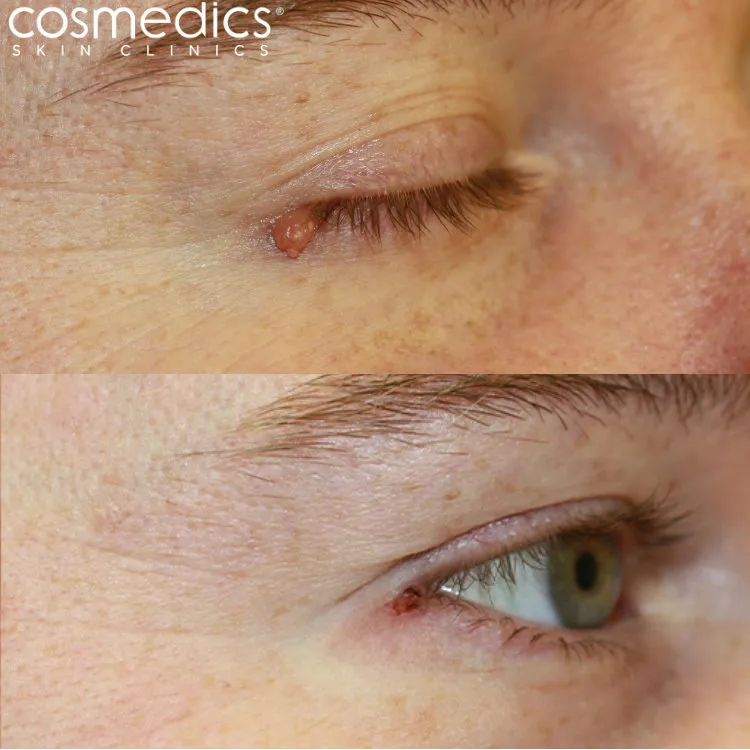
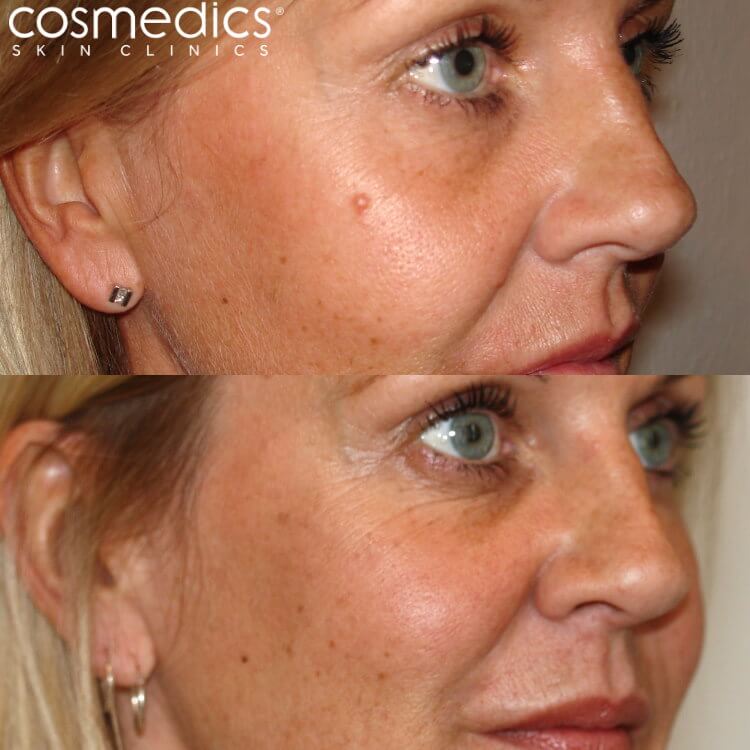
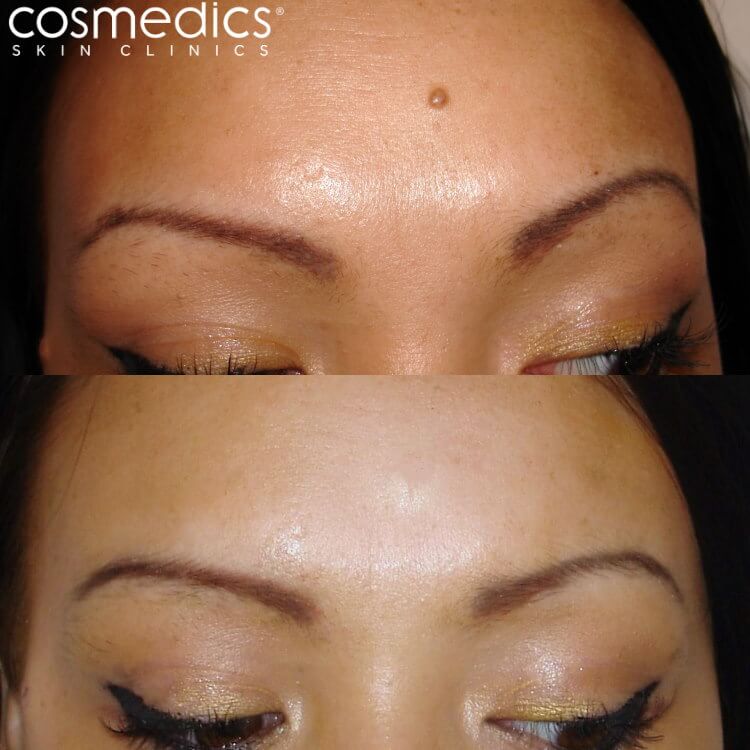
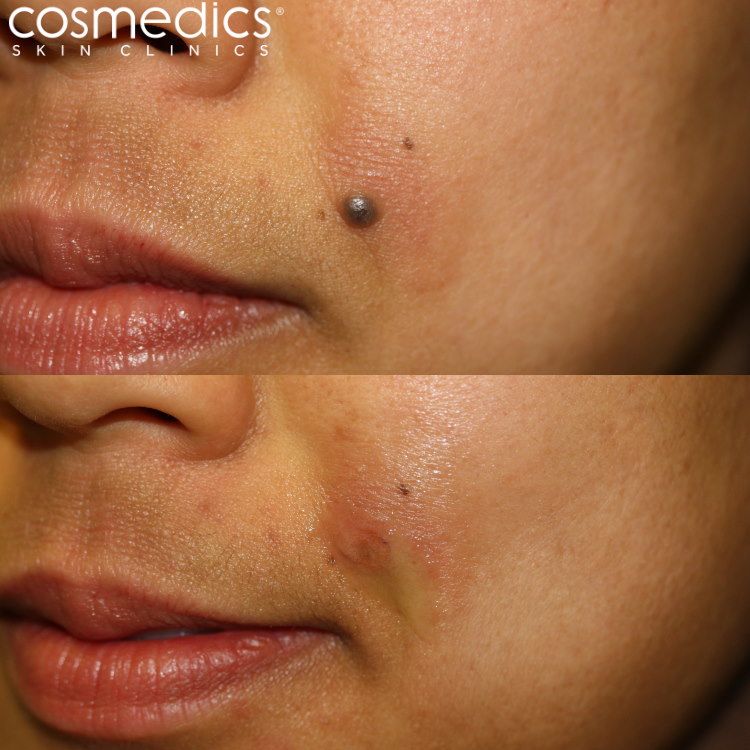
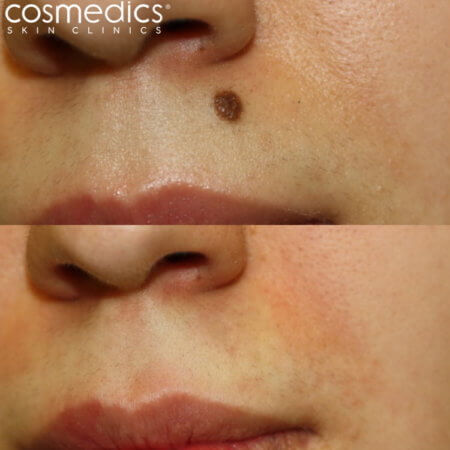
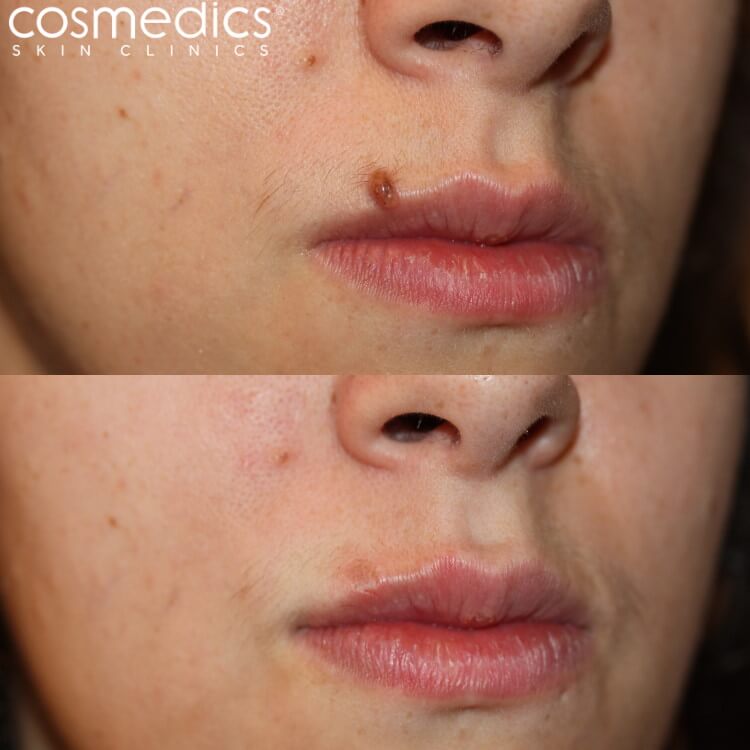
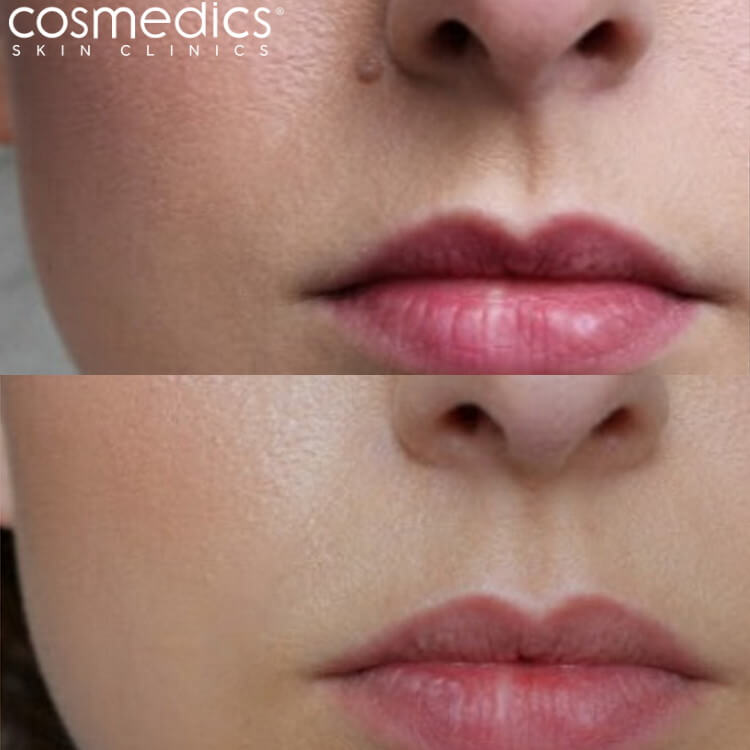
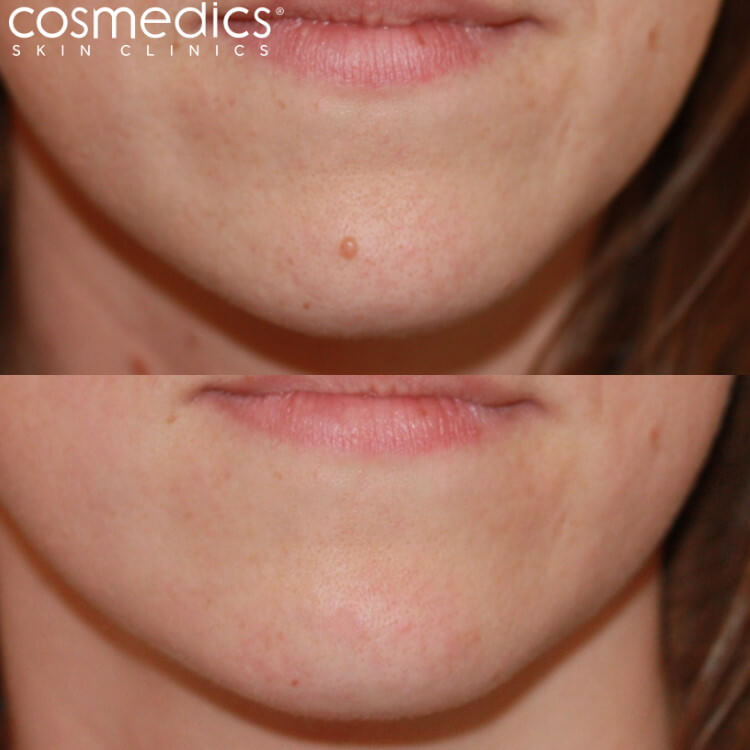
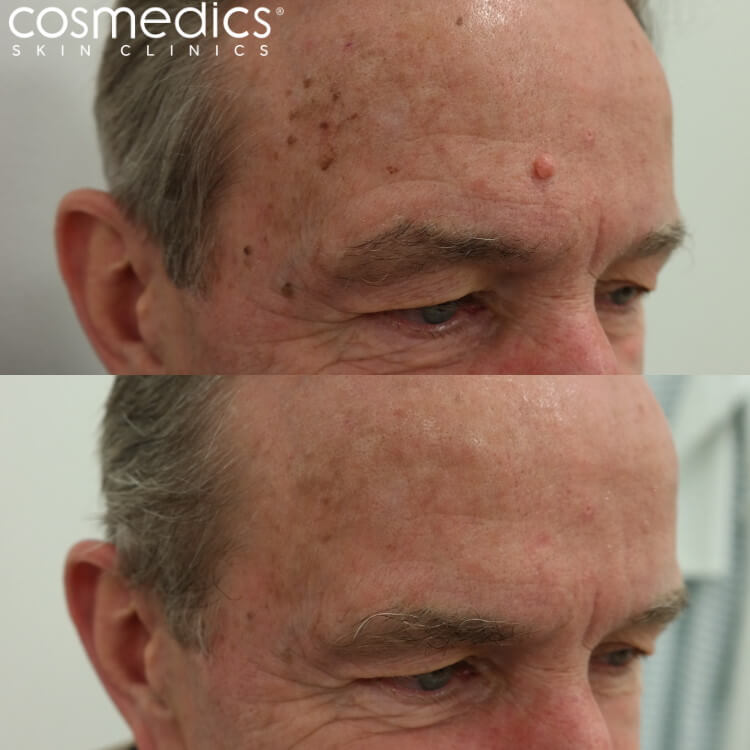
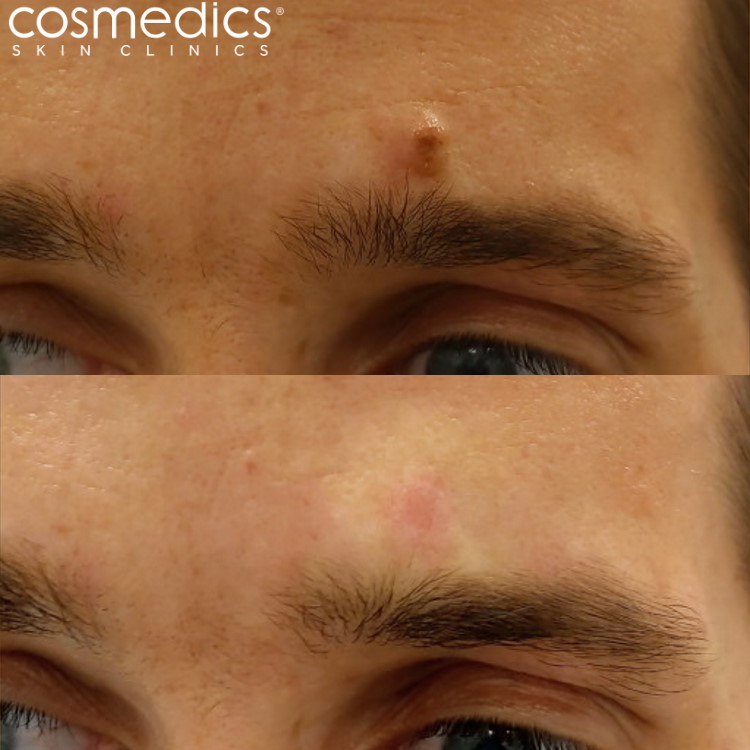
Before & After Mole Removal Photos & Video






FAQ's
Mole Removal Questions & Answers

The typical patient journey is once you have booked your appointment you will be seen by the doctor/surgeon to assess the mole; after which the treatment options are explained.
In most cases patients proceed to have the mole removed on the same day.
The mole is marked and a small injection of anaesthetic is placed just under the mole to numb it. After this you will NOT feel anything. The mole removal only takes a few minutes and a dressing placed over the top. Your wound in most cases will heal over 7-10 days and you can carry on normal activities thereafter.
Moles (or naevi) are a collective term for most skin lumps or blemishes that are often present on the face and body. They can be raised or flat, skin coloured or dark. Most are harmless but any changing moles should be examined by a doctor. Even harmless moles can be unwanted and yet are very simple to remove with the latest techniques.
Mole removal is advised for men and women who have either:
- a cosmetic mole that is often on the face, nose or body ie unsightly or irritating, or catching on clothing or a razor; or moles that are flat or raised or have some degree of color can often be unsightly, catch on clothing and generally be a nuisance.
- a suspicious mole that is changing in size, shape or colour and/or itches and bleeds
Mole removal from the face and body is done using a combination of surgery and laser to achieve the best cosmetic result. Local anaesthetic is used to ensure the procedure is painless.
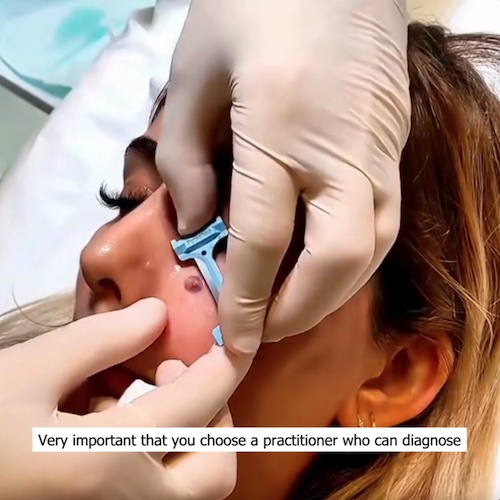
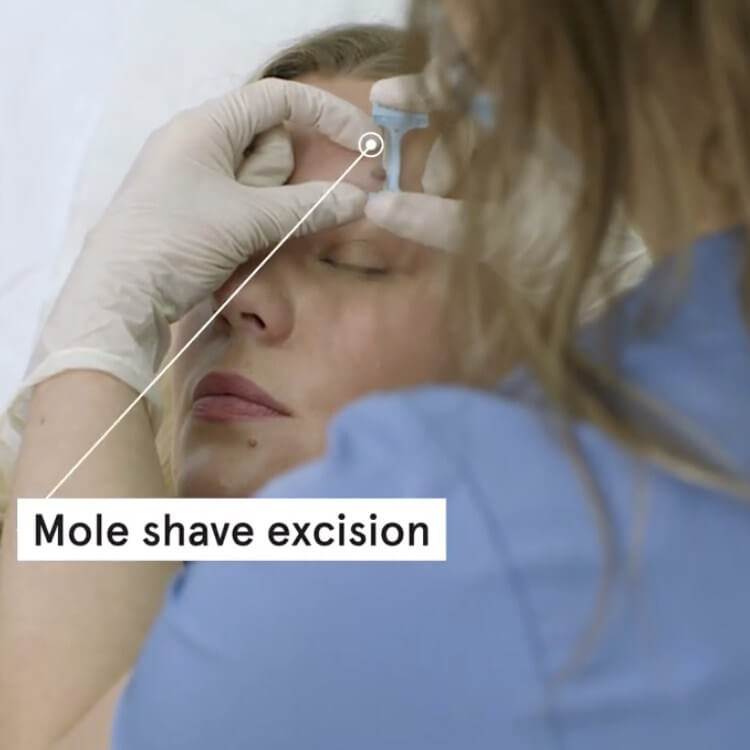
The most common way to remove moles that protrude from the skin is by shave excision. The procedure involves using a derma blade to remove the mole parallel to the surface of the skin. This leaves a small superficial wound which is then cauterised with a laser to stop any bleeding and tidy the wound. The whole process takes about 20 minutes. No stitches are needed and healing takes about 1 to 2 weeks.
Occasionally we use an elliptical excision for moles that are suspicious or where the cosmetic result is likely to be better than a shave excision. It is a deep excision that removes the mole completely. A cautery laser is then used to stop any bleeding. The resulting wound requires stitches which can be either dissolvable or non-dissolvable depending on the site of removal. Your specialist will advise which method of cosmetic mole removal is most appropriate for you.
Radiosurgery can be also used where we feel the lesion would leave better results and less scarring. For a consultation or further advice please call us on 020 7386 0464.
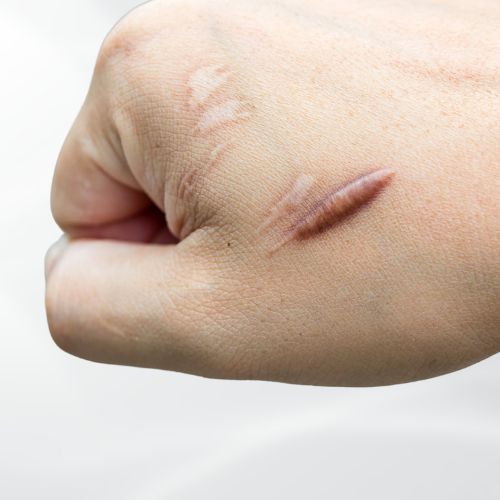
All mole removal procedures, both surgical and laser mole removal surgery, will leave a small scar which is normally far less noticeable than the original mole.
We use the latest techniques to ensure any scarring is minimal.
Rarely, some people with very dark or light skin have an abnormal response to healing and end up with larger scars than usual (hypertrophic or keloid scars).
Yes our medical guidelines state that we should send ALL mole specimens for testing.
The lesion/specimen goes to a separate laboratory and is examined under a microscope by another specialised histopathology doctor. This is the ONLY 100% way to determine if a mole is atypical or not as often normal looking moles can be ok on the surface but abnormal lower down. See above for mole testing costs.
Mole removal and subsequent testing or histology of the mole or skin lesion is the only way of 100% diagnosis where there is a risk it may become malignant (cancerous).
Clinical observation and dermoscopic examination by doctors is an aide to help decide which may be problematic but do not give a 100% diagnosis which is why all moles are sent for testing.
Cosmedics send all moles to be independently analysed for our patients’ peace of mind.
Mole removal scarring is inevitable will all forms of mole removal however the skill of the surgeon is to limit this to a minimal degree that is almost not noticeable.
The mole removal technique is one important factor to help achieve the best results but also daily massaging with a scar treatment moisturiser over the scarred area can help in the first 3 months.
Silicon scar reduction gels can also come in plaster like dressings rather than gels that can be easier for areas where gels are not suitable.
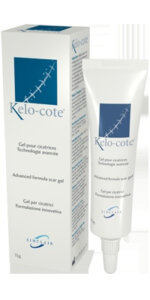 Our team not only uses the best and latest mole removal procedures but our aftercare protocol ensures quick healing and minimal scarring. As part of our aftercare, we recommend the use of Kelo-cote UV silicone scar gel that is clinically proven to reduce scarring and protects the healing wound from sunlight.
Cosmedics now stock this product with UV protection which protects the healing wound from sunlight (which can delay healing). This means mole removal is ideal all year round with this added sun protection and you can be sure you are getting the best outcome possible.
Fortunately, with mole removal, the risks are very low and it is a safe and simple procedure.
With any cosmetic plastic surgery procedure however, there are potential side effects such as infection, bleeding and scarring. At Cosmedics our doctors and surgeons who are experts in dermatological surgery will ensure the highest standards of care.
Skin moles removal surgery is relatively simple and in most cases you can return to normal activities the same day.
It is not safe to remove a colored mole if you don’t know what type of mole it is and also the scarring can be far worse than with conventional procedures.
We advise patients not to get rid of moles at home. Various over the counter or internet products and creams, or home remedies such as bloodroot, vinegar and other acids are not recommended.
Most moles are sent for histology after the removal. This is the analysis of the mole which is done at a separate specialised laboratory using a high-powered microscope to detect any abnormal cells.
Although most moles can look normal to the naked eye, occasionally early abnormal cells can be lower in the skin, which could cause skin cancer – hence the need to send for analysis.
Cosmetic mole removal by laser or surgery is not performed on the NHS and waiting times for non-urgent care can be very long. See NHS advice here for more information about mole removal.
Cosmedics Skin Clinics are specialist in mole removal and we are able to charge affordable prices compared to private hospitals.
We carry out mole removal at all of Cosmedics Skin Clinics locations in London and Bristol.
We recommend you seek a doctor’s advice for any of your moles if you notice one or more of the following symptoms:
- It has/is changing colour
- It has/is changing shape and size
- It is inflamed, itchy or painful
- It is protruding or causing irritation (for example, it’s catching on clothing)
We recommended you self check yourself every 2-3 months looking for the classic signs of skin cancer which are ABCDE –
- A – asymmetry
- B – Border
- C – colour
- D – diameter >6mm
- E – evolving.
Healing time depends on the type of mole removal:
- Shave excision (no stitches):
The wound usually heals on the surface within 1–2 weeks , but the pink mark can take several weeks to months to fade. - Ellipse excision (with stitches):
Stitches are removed after 7–14 days , and the wound is closed at this point. However, the scar continues to mature over 6–12 months .
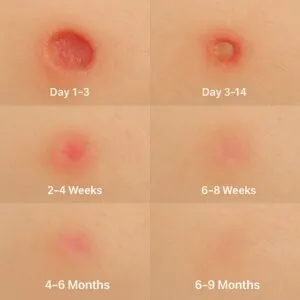
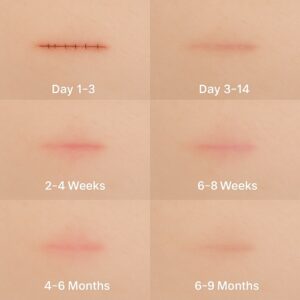
Mole Removal Healing Timeline
Here is a more detailed timeline of the healing process.
Day 1–3
- Shave excision: Looks like a flat graze or shallow wound. May scab over.
- Ellipse excision: Linear incision with stitches in place. Redness, mild swelling, and tenderness are normal.
Day 3–14
- Shave excision: Scab falls off, leaving a flat pink mark. Skin may feel tight or itchy.
- Ellipse excision: Stitches remain until removal (7–14 days). Scar appears as a thin red line.
2–4 Weeks
- Shave excision: Flat pink/red patch as new skin forms. Often feels smoother than surrounding skin.
- Ellipse excision: Wound fully closed. Scar looks pink/red and may be slightly raised or firm.
6–8 Weeks
- Shave excision: Mark fades gradually, blending more with surrounding skin.
- Ellipse excision: Scar tissue flattens. Still pink but sensitivity and itching reduce.
4–6 Months
- Shave excision: Mark becomes much lighter and softer in texture.
- Ellipse excision: Scar softens, lightens, and blends more with surrounding skin.
6–9 Months
- Shave excision: Faint patch, often barely noticeable.
- Ellipse excision: Pale, flat line remains. Final appearance depends on skin type, healing, and aftercare.
For shave excisions we normally advise the following aftercare:
- If you have a dressing you will be told when it can be removed;
- Vaseline is normally then applied to keep the wound moist for 1 to 2 weeks until healed;
- The wound will be red for 2 to 3 weeks, which gradually settles over the next few months;
- Massaging with oils (bio-oil) or moisturising (dermatix) creams is advisable after 2 to 3 weeks to help reduce any scarring;
- If there is any increasing pain or redness, consult your doctor
For detailed information
For elliptical mole excisions we normally advise the following aftercare:
- Keep the wound dry for 2 days;
- Dressings can be left for up to a week;
- You will be informed as to whether your stitches are dissolvable or need to be removed;
- Over 1 to 2 weeks, in areas where the skin is under tension such as the back and legs, it is advisable to reduce exercises which would possibly stretch the wound;
- Steri-strips can be applied over the wound for up to 3 weeks to help the wound heal;
- After 3 weeks the wound can be massaged with oils bio-oil or silicon scar creams (dermatix);
- If there is any increasing pain or redness consult your doctor as it could be a sign of infection.
For detailed information




Mole removal clinical references and studies
(1) Dermatol Surg
- Shave Excision Versus Elliptical Excision of Nonpigmented Intradermal Melanocytic Nevi: Comparative Assessment of Recurrence and Cosmetic Outcomes
- Leandra Camini 1, Ana Paula Dornelles Manzoni 1, Magda Blessmann Weber 1, Laura Luzzato 1, Andréa Santos Soares 2, Renan Rangel Bonamigo 3 4 5
- DOI: 10.1097/DSS.0000000000002666
Similar Articles
- [Shave excision of melanocytic nevi of the skin: indications, technique, results].
- Breuninger H, Garbe C, Rassner G.Hautarzt. 2000 Aug;51(8):575-80. doi: 10.1007/s001050051174.PMID: 10997312 German.
- Deep shave excision of macular melanocytic nevi with the razor blade biopsy technique.
- Gambichler T, Senger E, Rapp S, Alamouti D, Altmeyer P, Hoffmann K.Dermatol Surg. 2000 Jul;26(7):662-6. doi: 10.1046/j.1524-4725.2000.00036.x.PMID: 10886275
2 – Shave excision of common acquired melanocytic nevi: cosmetic outcome, recurrences, and complications.
- Ferrandiz L, Moreno-Ramirez D, Camacho FM.Dermatol Surg. 2005 Sep;31(9 Pt 1):1112-5. doi: 10.1097/00042728-200509000-00005.PMID: 16164859
- The feasibility of the razor-blade shave technique in the diagnosis and treatment of benign and malignant skin lesions on the face
- ten Koppel PG, Vuyk HD, Neumann HA.Ned Tijdschr Geneeskd. 2005 Jul 9;149(28):1561-7.PMID: 16038159 Review. Dutch.
3 – J Cutan Aesthet Surg. 2009 Jul-Dec; 2(2): 88–91.
- Q-switched Nd:YAG Laser to Treat Nevomelanocytic Nevi
- SG Parasramani, CM Oberai, KR Amonkar, and S Naik
- doi: 10.4103/0974-2077.58521
4 – Ann Dermatol
- Efficacy and safety of 1,064 nm Q-switched Nd:YAG laser treatment for removing melanocytic nevi
- Yoon Jee Kim 1, Kyu Uang Whang, Won Bok Choi, Hyun Jo Kim, Jae Young Hwang, Jung Hoon Lee, Sung Wook Kim
- DOI: 10.5021/ad.2012.24.2.162