



Please call us or fill in the form below and we will be delighted to help with your enquiry.
 0207 386 0464
Eyebrow Cyst Removal
Remove eyebrow cysts safely at our London and Bristol clinics, where our expert eye and facial surgeons use precise surgical or laser techniques. Performed under local anaesthetic to minimise scarring, we maintain your natural brow hair and shape. We achieve the best cosmetic results possible in this highly specialised area.
Cyst Removal Reviews
Treatment Benefits

Treatment

Recovery

Results

Duration



Eyebrow Cyst Treatment Information
What is a cyst
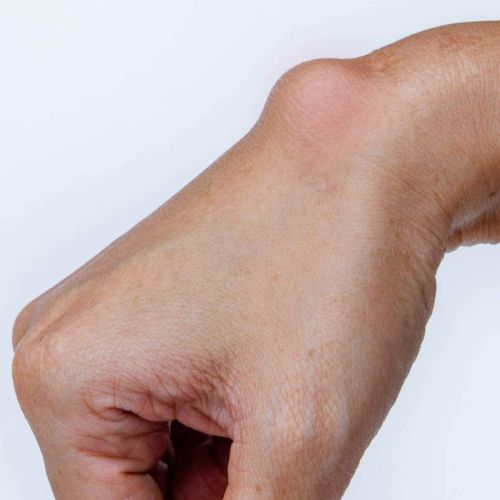
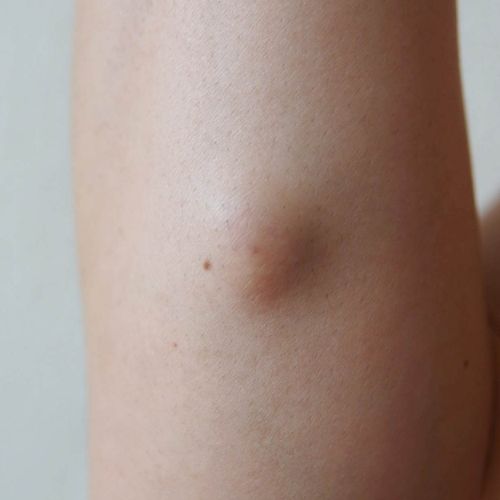
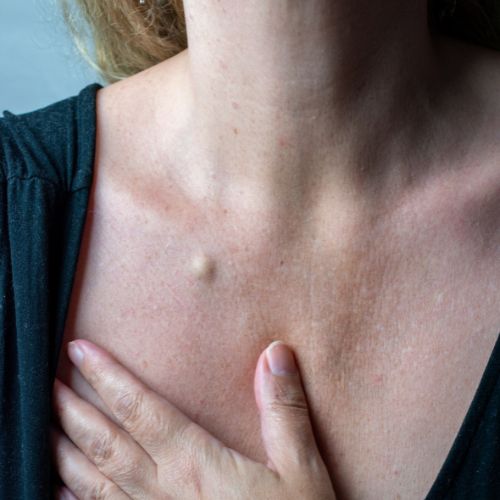
Skin cysts appear gradually but tend to get bigger over time. They can appear anywhere on the face or body. One particular area where you may get a cyst is the eyebrow. These pea-shaped pockets of tissue can form at or beneath the outer section of the forehead and fill with pus, fluid, or skin debris.
Cysts are painless. When there is a cyst in an area of hair growth, such as the eyebrow, it can be quite noticeable as the cyst stretches the skin and can protrude between the hair follicles. The raised dome skin tends to be quite smooth to the touch.
How are eyebrow cysts formed?

Cysts tend to form around blockages. One reason they’re common on the eyebrows is due to the grooming. Tweezing, shaving, waxing, or plucking your eyebrows could result in ingrown hairs, which can trap bacteria, dirt, and dead skin cells inside the hair follicles. This obstruction can be bothersome and lead to minor skin irritation, infection and/or cyst formation.
What types of cysts are formed?
Eyebrow cysts may be epidermoid or sebaceous cysts. The types of cysts are not the same. Epidermoid cysts are more prevalent than sebaceous cysts.
Epidermoid cysts
Epidermoid cysts are noncancerous bumps that appear beneath the skin but are most common on the face, neck, and torso. They are small, slow-growing, and often painless.
Sebaceous cyst
Sebaceous cysts form around hair follicles when the sebaceous glands become blocked, trapping keratin fluid. They can be uncomfortable to touch especially if they become inflamed or infected.
The main problems with cysts are aesthetic concerns (appearance) or practical issues (catching on clothing etc). However, if the cyst is uncomfortable, bursts, or becomes infected; then it can become a medical issue and you should see a doctor to get it properly treated.
What is the most common type of cyst on the eyebrow?
Periorbital dermoid cysts are the most common type of eyebrow dermoid cyst. This type of cyst develops on the outer edge of one of your brows.
At what size does an eyebrow cyst need surgery?
The NHS tends to view cysts as a cosmetic issue unless they are infected or very large. However, doctors and surgeons at Cosmedics Skin Clinics can remove cysts before they become such a problem. Early removal is best as smaller cysts leave smaller scars after removal. However, we have also removed some very large cysts that had been left untreated for years.
What can happen if an eyebrow cyst is left untreated?
If you do not treat an infected eyebrow cyst, it can spread to the surrounding tissues, resulting in cellulitis. In the worst-case scenario, infection of the bloodstream.
Thankfully, the majority of cysts are simply bothersome lumps and don’t present any immediate medical risk. If you leave a cyst untreated, the most likely outcome is that it will continue to get bigger and more noticeable.
Can eyebrow cysts be cancerous?
The majority of skin cysts are harmless and do not cause any problems. Although exceedingly rare, some eyebrow cysts may be cancerous, in the same way as some sebaceous or epidermoid cysts. If our doctors have any concerns, they’ll recommend histology (testing) after removing the cyst. This is carried out at an expert independent testing company.
Can I remove a cyst on my eyebrow myself?
Do not attempt removing an eyebrow cyst or any other kind of cyst on your own. This is a minor surgery procedure and should be carried out in medical facility using sterile instruments by a trained doctor or surgeon.
Why should an eyebrow cyst be removed by professionals?
Eyebrow cysts are usually not cancerous, so cyst removal is a relatively straightforward procedure. However, it should only be performed by trained and experienced medical professionals.
Eyebrow cyst removal is carried out under local anaesthetic to ensure that it is pain-free throughout. The doctor will make a small incision using a scalpel and will ensure that the cyst sac is fully extracted in order to prevent it from returning. They will then close the wound using a few neat stitches.
Is eyebrow cyst removal surgery a serious procedure?
Eyebrow cyst removal is classed as minor surgery. It is carried out in clinic using only local anaesthetic. You may not even need painkillers when the anaesthetic wears off, but any discomfort can be managed with paracetamol/ibuprofen which are readily available in supermarkets or chemists.
Patients can return straight home or to work afterwards. There will be a few aftercare guidelines, for example, avoiding swimming, hot saunas or vigorous exercise for a few days while the wound heals. These will be explained fully in your appointment.
Why go private to get your eyebrow cyst professionally removed
Cyst removal on the NHS is not readily available, as the NHS now classes many cysts as a cosmetic issue unless they are infected or very large. If you do qualify, you may have to wait a while. If you go private, there are no waiting lists at all. You can be seen without referral so you don’t need to bother your doctor at all. There’s no need to wait until the cyst is big enough or inflamed, cysts can be removed at any size.
Why choose Cosmedics for eyebrow cyst removal
We understand that an eyebrow cyst can be both uncomfortable and conspicuous — especially in one of the most visible areas of the face. Our expert team offers professional eyebrow cyst removal services in London and Bristol, using pain-free laser and micro-excision surgical techniques performed under local anaesthetic. This ensures safe, efficient treatment with minimal downtime and scarring.
Whether your cyst is causing irritation, growing in size, or simply affecting your confidence, our precise techniques deliver long-lasting results while restoring smooth, natural-looking skin. Each cyst is carefully assessed, and where necessary, samples can be sent for analysis to ensure complete safety and optimal outcomes.
By making clinical treatments affordable in a welcoming and professional environment, Cosmedics Skin Clinics has become a leading destination for skin treatments. All treatments are carried out by doctors and surgeons who have extensive experience in carrying out minor surgery on skin lesions. They offer long appointments so their doctors will often be able to remove the cyst during the same appointment. All treatments are pain-free thanks to local anaesthetic and the team excel in minimal scarring results, thanks to their techniques and skill.
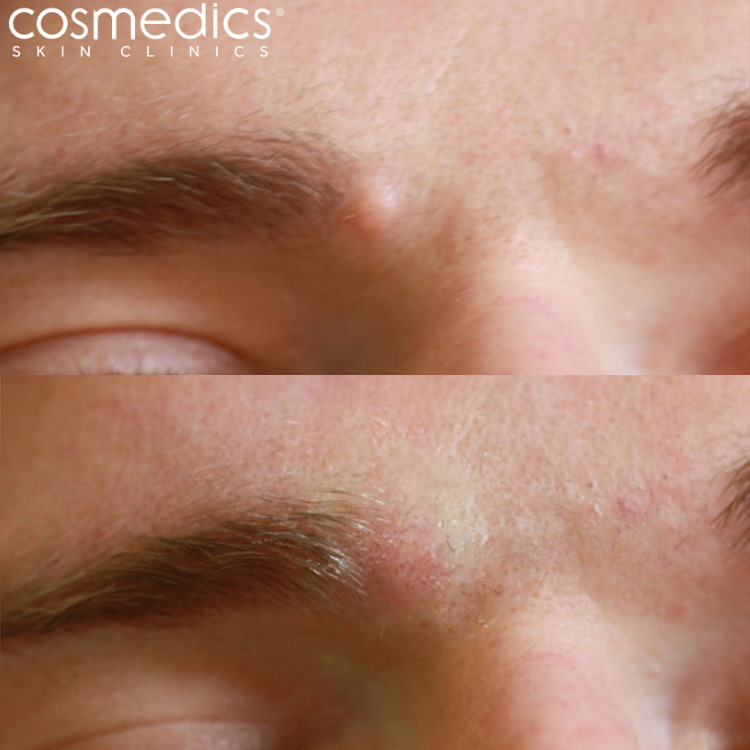
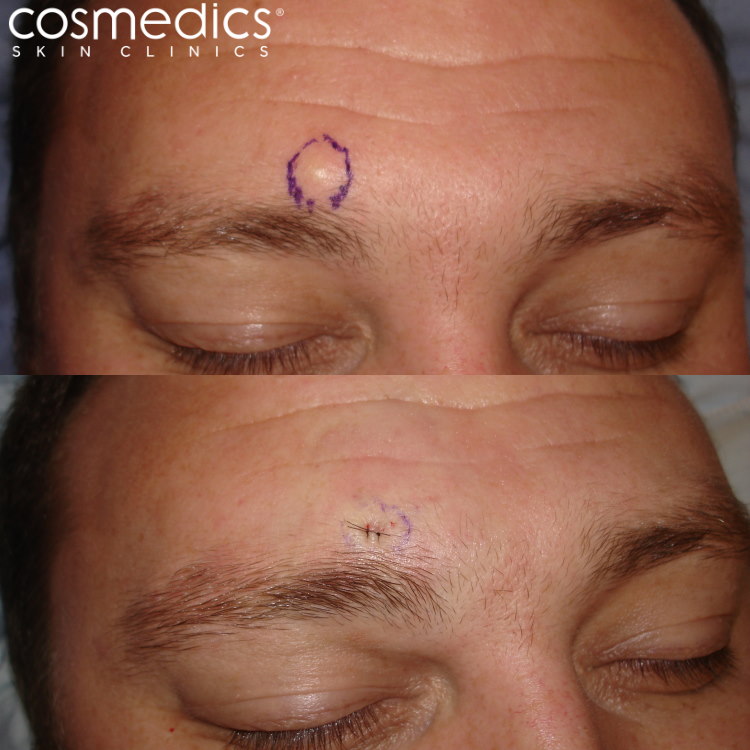
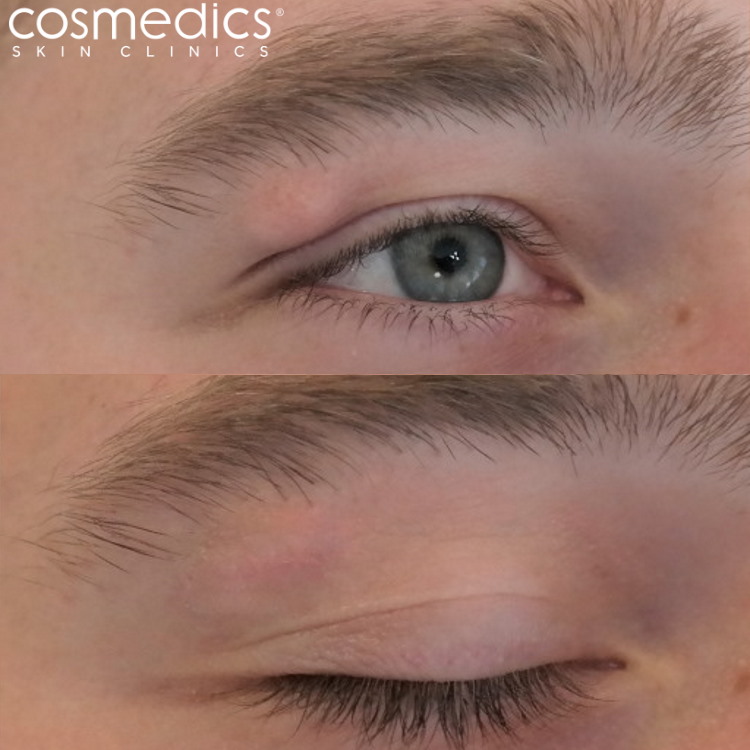
Eyebrow Cyst Removal Before & After Photos & Video




FAQ's
Eyebrow Removal Questions & Answers

It can be difficult to tell whether a lump is a cyst or something else that might need treatment. Sebaceous cysts can be confused with lipomas that often sit deeper in the skin. These are also harmless and can be removed if they are bothersome.
It can be very difficult to self-diagnose a cyst, as there are so many types. Our doctors are expert in diagnosing and treating all sorts of lumps and bumps, blemishes and lesions. As well as cysts and lipomas, we also see and treat moles, skin tags and warts.
The best way to find out more is to book a face to face consultation with one of our experts. You’ll get a proper diagnosis as well as advice about treatment options.
Cysts grow with time and can become uncomfortable and a nuisance that means people become more self-conscious about them. If a cyst is on the face ideally you want to remove them when they are small so any scar will be less. If they are on the body or scalp when they reach 2-3 cm in size you would ideally time to remove them so any scarring is minimal.
If left untreated, benign cysts can cause complications including infection; where the cyst fills with bacteria and pus and becomes an abscess which leads to be a bigger wound and more scarring.
Yes, when performed by an experienced specialist. At Cosmedics, our surgeons are highly practiced in facial anatomy. We use localised numbing that stays restricted to the eyebrow area, and we take extra precautions to protect the eye throughout the short procedure.
No. We never shave the eyebrow for cyst removal. Apart from being embarrassing for the patient, shaving also makes it harder for the surgeon to see the natural “grain” of your hair, which is essential for placing the incision correctly. We simply clean the area thoroughly and work between the existing hairs.
This is the most common concern for patients. Our surgeons use a “follicular-focused” technique. By making a precision incision parallel to the direction of the hair growth, we avoid damaging the hair bulbs as much as possible. This allows the hair to grow back naturally through and over the scar, usually making the treatment site invisible once healed.
The tissue around the eye is very loose, so some swelling is normal. However, the eyebrow is relatively separate from the delicate eyelid or eyeball area. To minimise swelling, we recommend:
- Cold Compresses: Applying a clean, cold pack regularly on the day of surgery (you will be given advice on this).
- Avoid Heat: Saunas, steam rooms, sunbathing and vigorous exercise are best left for a few days, while your skin heals.
- Gentle Care: Avoid rubbing your eyes or brows for the first week.
It can be hard to tell the difference yourself. A cyst is a fluid-filled sac closer to the skin’s surface, whereas a lipoma is a soft fatty lump that often sits deeper, sometimes underneath the thin muscle of the forehead/brow. During your consultation, we will palpate (feel) the lump to determine exactly what it is before proceeding. The diagnosis and treatment recommendation will be fully explained and discussed before you go ahead.
- Plucking/Threading: You should wait at least 2 weeks, or until the skin is no longer pink and tender.
- Waxing/Tinting: We recommend waiting 4 weeks. The chemicals in hair dye and the heat/tension of wax can irritate the fresh scar tissue and may cause pigment changes.
Cysts on the very edge of the eyelid (often called Cysts of Moll or hidrocystomas) are handled with micro-surgical techniques. These are common and can be removed quickly and safely in-clinic, usually leaving no visible mark at all.
We also treat xanthelasma and skin tags in the delicate eye area. Our team includes doctors, plastic surgeons and a consultant occuloplastic surgeon with an impressive array of skills and experience, so you’re in safe hands. We’ll give honest advice about what we can achieve and what to expect.