- TreatmentsInjectablesMoles, Cysts & TagsLaser/IPLEye/Ear Surgery
- Prices
- Doctors
- Clinics





 0207 386 0464
Facial cyst removal is a safe and effective procedure to remove unwanted cysts on the face while minimising scarring. Using pain-free laser and surgical techniques, our experienced clinicians ensure precise removal tailored to the delicate facial area. Each cyst is carefully assessed for suitability, and, where necessary, samples can be sent for analysis to ensure complete safety. This minimally invasive approach provides a quick solution, restoring smooth, clear skin and enhancing both appearance and confidence.


| Treatment | Surgery Cost |
|---|---|
| Simple cyst | from £500 |
| Larger cysts | from £750 |
The cost of consultation with our doctors is £75. This is redeemable against the cost of treatment carried out on the same day.
Prices are a guide to the costs and the exact price can only be determined once the doctor has examined you in person. Most cysts don’t need histology testing. However, in certain circumstances if the doctor thinks it is necessary, then they will discuss this with you and the related costs.
Please call 0207 386 0464 OR email [email protected] for help.
It’s not uncommon for anyone to have a skin cyst. They happen quite frequently. Cysts on the face aren’t generally something to worry about from a medical perspective. They’re not cancerous. However, they can grow to be sizable nuisances and can be awkward as well as unsightly.
These bumps certainly are not very attractive and because of this, it’s understandable if you consider cyst removal.
If you believe you have a cyst, first of all, it’s best to consult a doctor for a proper diagnosis. This will ensure that it’s nothing more serious and if it is a cyst, the doctor will be able to identify the type of cyst you have. You can visit your GP for an initial examination or else book an appointment with one of Cosmedics’ experts.
If the cyst is painful, it could mean it’s infected, so don’t ignore the signs. Having a professional examination is important to get a proper diagnosis and treatment if necessary.
The main cause of facial cysts is blocked or damaged sebaceous glands. If you have hair follicles that are blocked with dead skin cells, you may get a cyst.
These fleshy lumps can vary in tone between a pinky, yellowish and tan-colored lesion and are filled with pus or thick liquid substance that develops from the keratin.
Having a facial cyst can be awkward if it prevents you from shaving, keeps growing, itches, becomes inflamed, or is in an awkward area of the face. Skin cysts are usually small and painless, but they can cause problems if they get too large or become infected. If they have pus, it’s possible that they can become infected and burst.
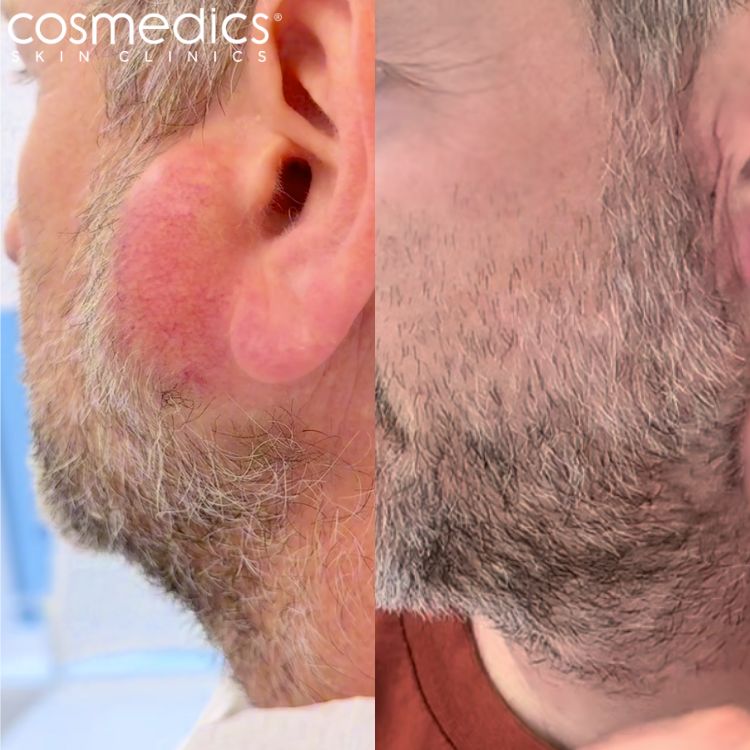
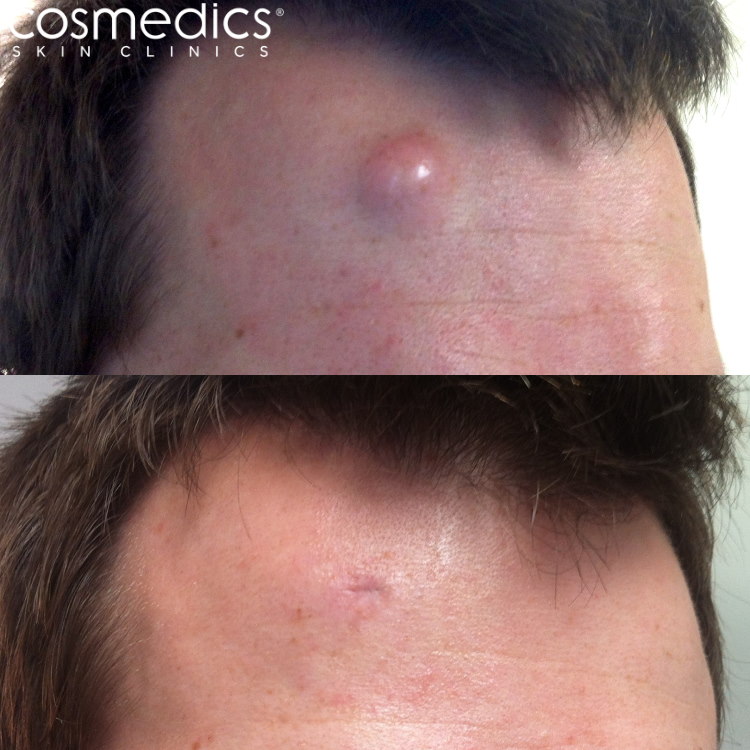
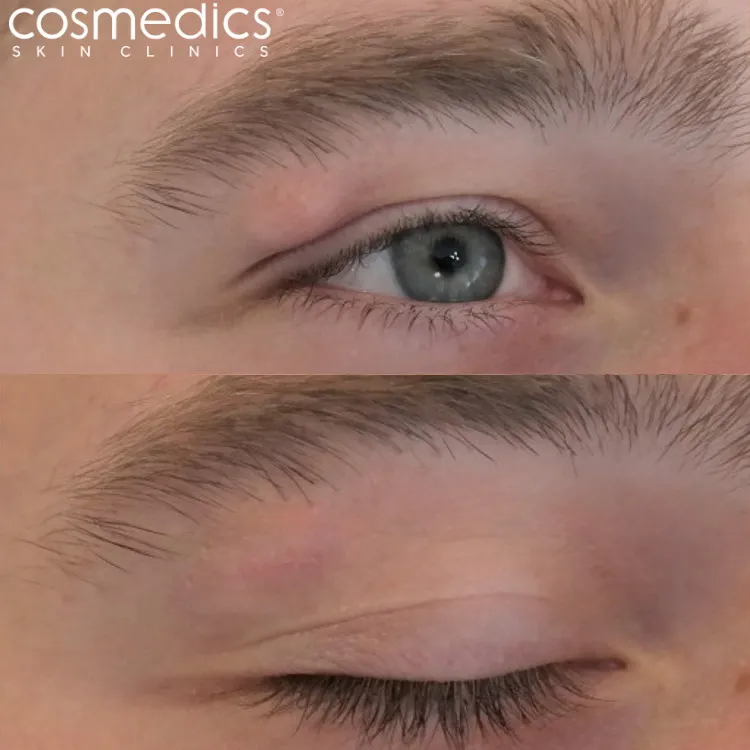
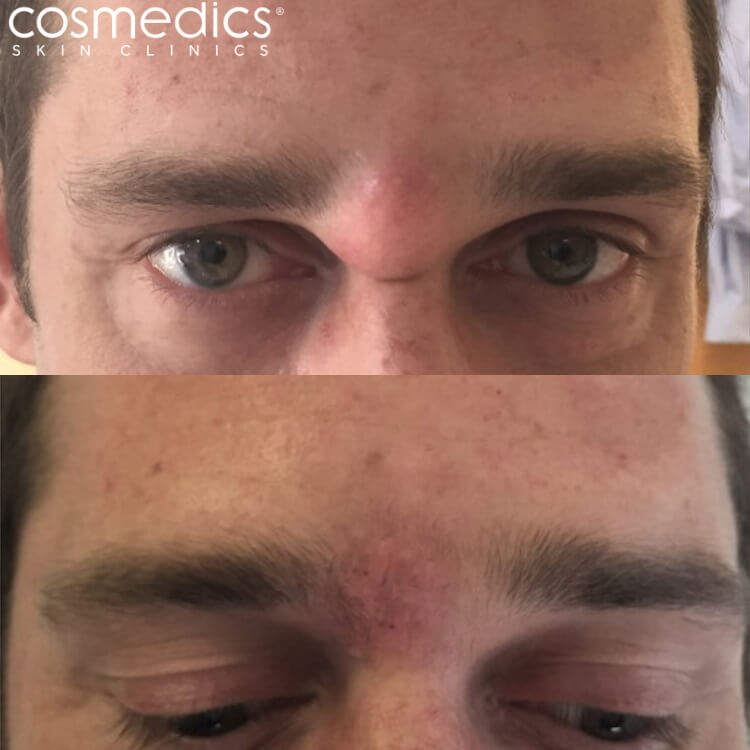
Patients are often concerned about how the skin will look after a cyst has been removed – especially for facial cysts. The good news is that you can expect to look a lot better without the lumpy growth on your face. Our medical team work very hard to produce results that leave a minimum amount of scarring. Once healing is complete, the scars tend to be very small and neat.
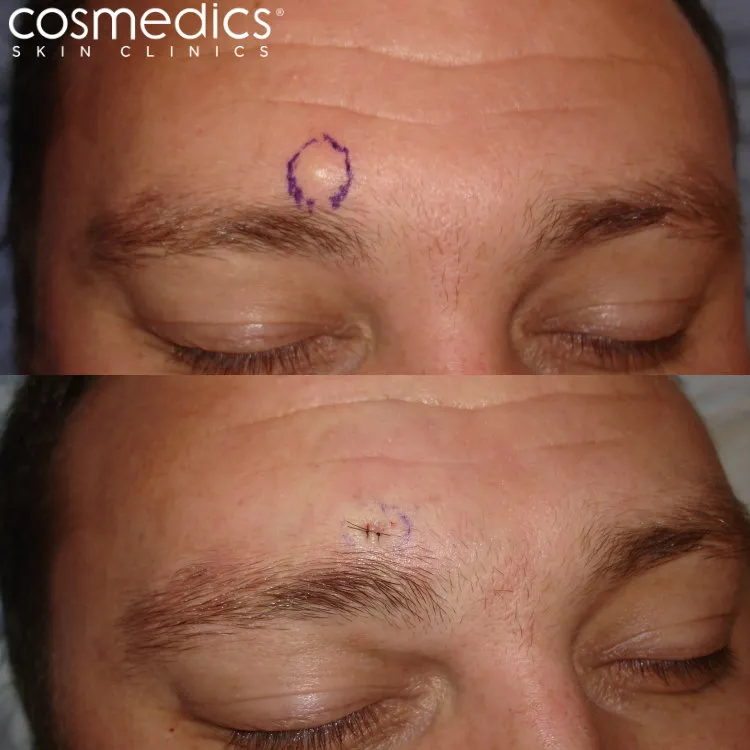
Realistically, you cannot expect to see the finished result straightaway. After cyst removal, the skin will be red and there will be a visible wound until it has healed. This will gradually improve as the area heals but it can take up to a year for the scar to fully resolve.
See our before and after results photos to view how our patients look after the cyst has been removed. Most of these are taken immediately after cyst removal and illustrate that even with a visible wound, the skin looks better already. After healing there is generally very little noticeable trace of the cyst.
Our caring doctors and surgeons remove cysts of all types using a minor surgical procedure. This is carried out using a local anaesthetic, so it is completely pain-free.
A small incision is made and then the cyst is carefully removed. We ensure that the cyst ‘sac’ is extracted in its entirety in order to prevent it regrowing in the future.
Depending on the size, you may need stitches to close the wound. Depending on the type of stitches used, these may fall off on their own after a few days or else you may need to return to the clinic to have them removed after about 7 to 10 days after the procedure.
Our specialists have extensive experience in facial cyst removal and will explain the process every step of the way to put you at ease.
It’s possible to have the cyst taken care of the same day you come in for a consultation, so call for your appointment soon.
After the doctor removes your cyst, you may have a little discomfort once the local anaesthetic wears off, but only for a day or so. If you need to, you can take a regular over the counter pain reliever such as paracetamol or ibuprofen, but most people find they don’t need to. If you notice any swelling in the area, apply ice.
It’s best to avoid hot environments and strenuous activities for the first week or so while the wound is healing, so don’t do vigorous exercise, hot showers, sauna or swimming.
Once initial healing has taken place i.e. the wound has sealed over, light massage and moisturisation of the wound are highly recommended in order to aid the healing process and minimise scarring.
You’ll be given full advice on aftercare at your appointment and our experts are always on hand in case of any queries or concerns.
Treatments for facial cyst removal at Cosmedics Skin Clinics start in the range of £500. This price includes anesthetic, dressings and aftercare appointments where required.
Contact our skin care experts at 0207 386 0464 or email [email protected] for more information.
If the cyst causes any discomfort or makes you feel self-conscious, make an appointment with a Cosmedics Skin Clinics near you.
Facial cyst removal is available at all 4 locations in London – Harley Street, Putney, Knightsbridge and City of London. Cyst removal is not currently available at our Bristol clinic, but we’re happy to accept patients from anywhere in the UK who are able to travel to London. Most cysts can be removed same day and our clinics are all located within easy access of major tube stations.
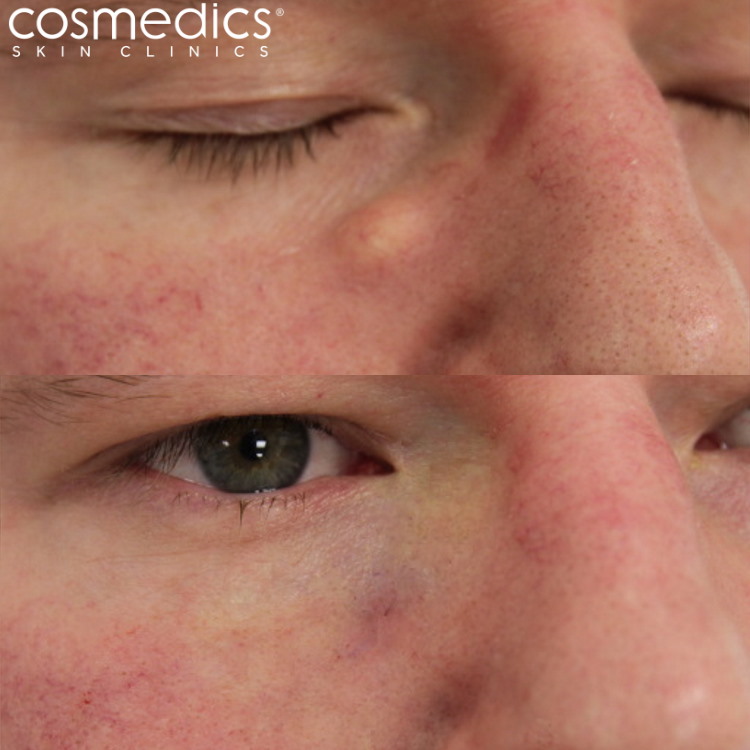

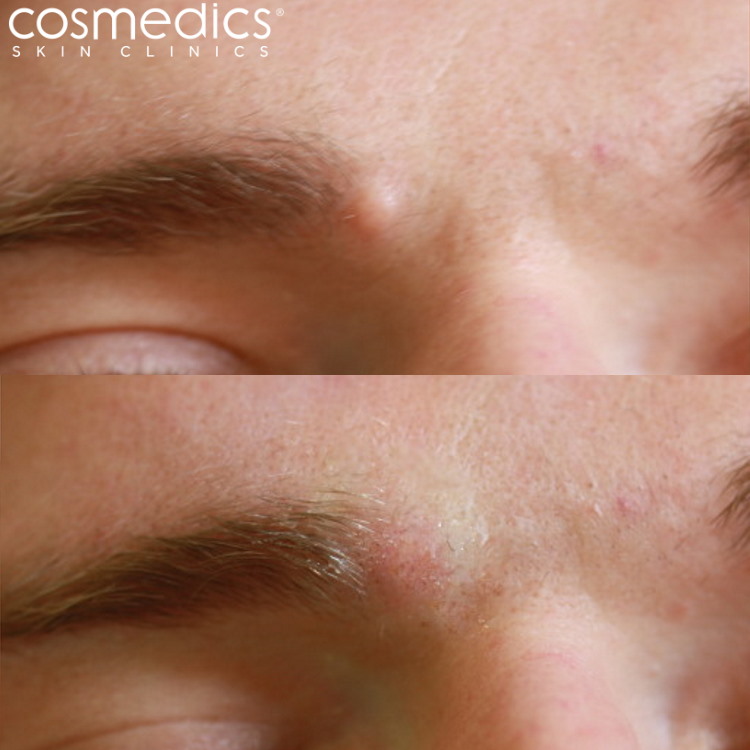
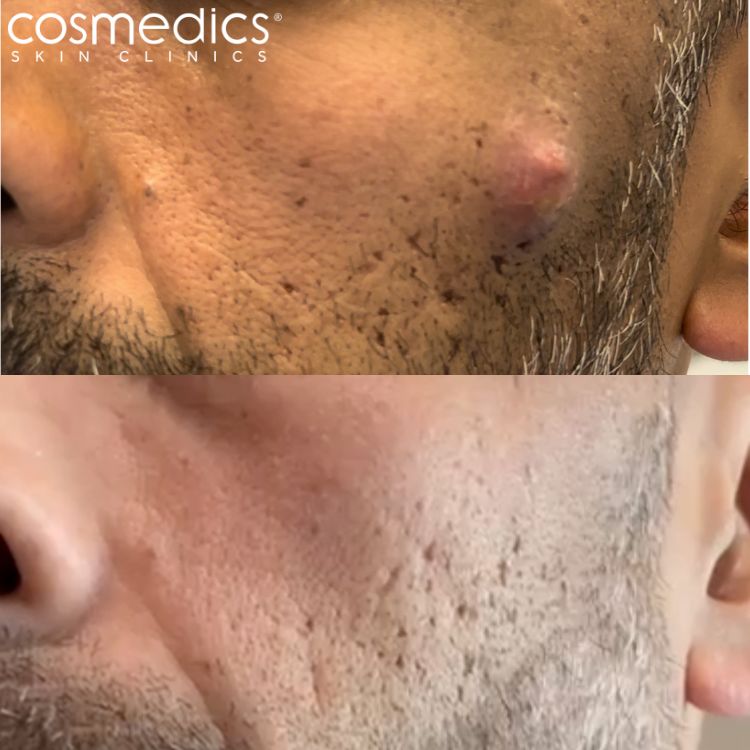
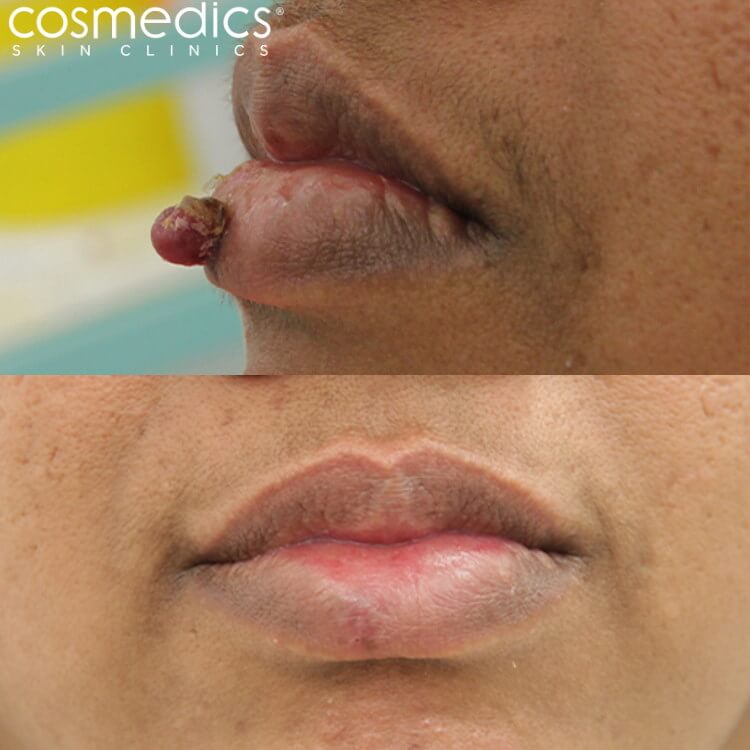

Any surgical incision results in a scar, but our surgeons specialize in “minimal-scar” techniques. For facial cysts, we aim to place incisions within natural skin creases or “expression lines” where they are least noticeable. Over time, these typically fade into a faint, thin line that is difficult to see.
No. The removal is “extra-capsular,” meaning we only remove the cyst and its sac from the subcutaneous layer of the skin. This does not involve the deeper muscles responsible for facial expressions. You may feel some “tightness” in the skin during the first week of healing, but this resolves quickly.
Many facial epidermoid cysts have a central “punctum” that looks like a large blackhead. This is actually the opening of the cyst sac. While it may look like a blemish you can squeeze, doing so often pushes the infection deeper. Our surgeons can remove the entire sac through a tiny incision to ensure it never returns.
Depending on the location of the cyst (such as the forehead or cheeks), some minor localised swelling or bruising is normal. Because facial skin is quite delicate, “gravity” can sometimes cause minor puffiness to shift slightly lower on the face for 24–48 hours. Using a cold compress intermittently on the first day helps minimise this.
Any swelling usually subsides within a day or two.
You should keep the wound clean and free of products for the first 48 hours. Once the wound has sealed (usually after 3–5 days), you can apply makeup around the area. However, we recommend avoiding applying foundation or heavy creams directly onto the incision until the stitches are removed and the skin has fully closed to prevent irritation or infection.
If the cyst was in a beard or moustache area, you should avoid wet shaving with a blade over the surgical site until the stitches are removed and the wound is fully healed (usually 7–10 days). Using an electric trimmer carefully around the area is typically fine after the first few days, provided you do not catch the stitches.
Fresh scar tissue is very sensitive to UV light, which can cause the scar to darken (hyperpigmentation). We recommend keeping the area covered or using a high-factor SPF (30-50) once the wound has closed. This is especially important for facial cysts as they are constantly exposed to daylight.
Cysts near the eye require extreme precision. Our surgeons are highly experienced in delicate ocular-area procedures, using specialised tools to ensure the cyst is removed safely while protecting the sensitive skin and function of the eyelid.

Cosmedics Skin Clinics was established in 2003 by Dr Ross Perry and has built up an enviable reputation over the last 20+ years for setting high standards of care and patient satisfaction within the professional skincare market.
Please call us or fill in the form below and we will be delighted to help with your enquiry.